Physician-Led USMLE Guidance
Written by Dr. Adeleke Adesina, DO, FACEP, FAAEM
Board-Certified Emergency Medicine Physician
Founder, SmashUSMLE Reviews
⭐ 4.8 Google Rating | 120+ Reviews
I hope you enjoy reading this article. If you need USMLE help, schedule a one-on-one free consult below.
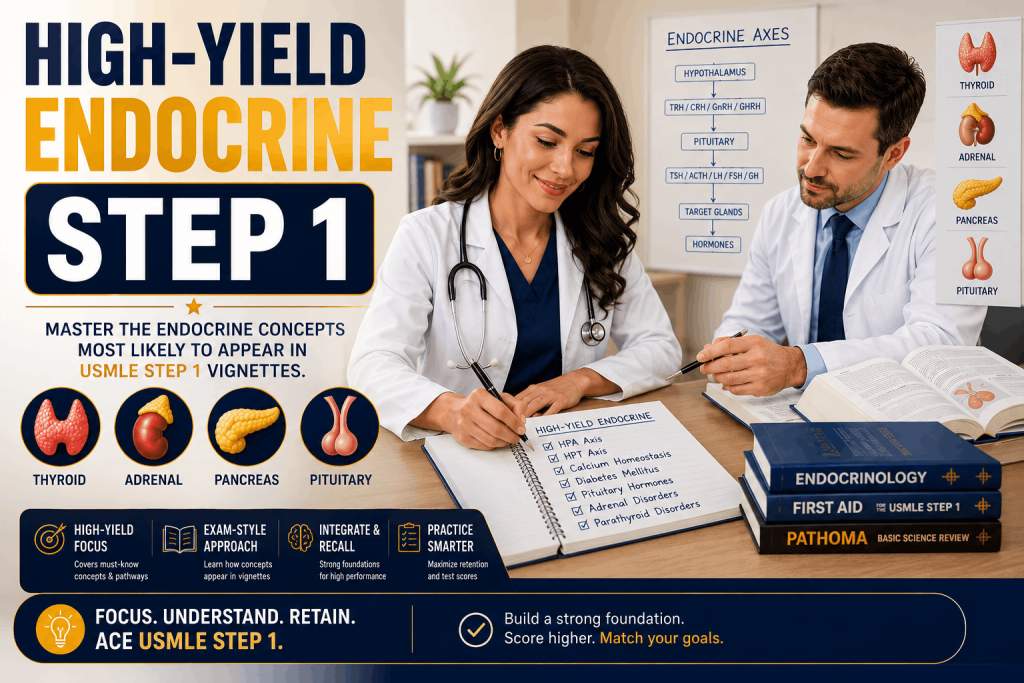
Book a USMLE Advising CallEndocrine topics are among the highest-yield concepts tested on USMLE Step 1. From thyroid disease and adrenal disorders to diabetes, pituitary pathology, and calcium regulation, mastering these endocrine topics can significantly improve your performance on board-style questions.
Many students struggle with endocrine questions because they memorize hormone facts without understanding feedback loops, receptor signaling, or how lab values change together.
The best way to study endocrine topics is to think like a physician: identify the gland, predict the hormone abnormality, interpret the feedback response, and connect the mechanism to the patient’s symptoms.
In this guide, we will break down the highest-yield endocrine topics for Step 1 and show you how to approach them in clinical vignettes.
Table of Contents
1. Highest-Yield Endocrine Topics Overview 2. High-Yield Endocrine Topics: Thyroid Disorders 3. High-Yield Endocrine Topics: Adrenal Disorders 4. High-Yield Endocrine Topics: Diabetes Mellitus 5. High-Yield Endocrine Topics: Calcium and Parathyroid 6. High-Yield Endocrine Topics: Pituitary Disorders 7. USMLE-Style Question 8. FAQsFree USMLE Step 1 Bootcamp
Learn how to master high-yield endocrine topics, avoid passive memorization, and study Step 1 with a physician-led system.
Reserve My SpotHighest-Yield Endocrine Topics Overview
The most important endocrine topics for USMLE Step 1 usually combine physiology, pathology, pharmacology, and lab interpretation in a single vignette.
Instead of memorizing isolated facts, focus on how hormones move, how feedback loops respond, and how diseases change laboratory values.
| Topic | What Step 1 Tests | How to Think |
|---|---|---|
| Thyroid | Graves disease, Hashimoto thyroiditis, thyroiditis, thyroid cancer, antithyroid drugs | Start with TSH, then free T4, then antibodies or radioactive iodine uptake. |
| Adrenal | Cushing syndrome, Addison disease, hyperaldosteronism, CAH, pheochromocytoma | Separate cortisol, aldosterone, and androgen pathways. |
| Diabetes | Insulin, glucagon, DKA, HHS, diabetes drugs | Connect insulin deficiency to ketones, potassium shifts, and acid-base changes. |
| Calcium/PTH | Hyperparathyroidism, hypoparathyroidism, vitamin D, bone disease | Track calcium, phosphate, PTH, and vitamin D together. |
| Pituitary | Prolactinoma, acromegaly, SIADH, diabetes insipidus | Localize anterior versus posterior pituitary and predict hormone effects. |
High-Yield Endocrine Topics: Thyroid Disorders
Thyroid disease is one of the most tested endocrine topics because it connects physiology, immunology, pathology, and pharmacology.
Endocrine Topics in Graves Disease
Graves disease is caused by TSH receptor-stimulating antibodies. Expect low TSH, high T3/T4, exophthalmos, pretibial myxedema, and diffuse radioactive iodine uptake.
Endocrine Topics in Hashimoto Thyroiditis
Hashimoto thyroiditis is autoimmune thyroid destruction. Look for hypothyroidism, anti-thyroid peroxidase antibodies, anti-thyroglobulin antibodies, lymphocytes, and Hurthle cells.
Thyroiditis Pattern
Subacute thyroiditis often follows a viral illness and causes painful thyroid enlargement. Early hormone leakage can produce temporary hyperthyroidism followed by hypothyroidism.
High-Yield Test Tip
For thyroid endocrine topics, always ask whether radioactive iodine uptake is high or low. High uptake suggests increased hormone synthesis. Low uptake suggests hormone leakage or exogenous thyroid hormone.
High-Yield Endocrine Topics: Adrenal Disorders
Adrenal disorders are classic endocrine topics because they test hormone synthesis pathways and clinical lab patterns.
Endocrine Topics in Cushing Syndrome
Cushing syndrome causes central obesity, proximal muscle weakness, hypertension, hyperglycemia, easy bruising, and purple striae. Step 1 often asks whether the cause is ACTH-dependent or ACTH-independent.
Endocrine Topics in Addison Disease
Primary adrenal insufficiency causes low cortisol and low aldosterone. Expect hypotension, hyperkalemia, hyponatremia, increased ACTH, and hyperpigmentation.
Endocrine Topics in Hyperaldosteronism
Primary hyperaldosteronism causes hypertension, hypokalemia, metabolic alkalosis, low renin, and high aldosterone.
Congenital Adrenal Hyperplasia
For 21-hydroxylase deficiency, remember decreased cortisol, decreased aldosterone, and increased androgens. This causes salt wasting, hypotension, hyperkalemia, and virilization.
Download the Step 1 Endocrine Worksheet
Use this worksheet to organize endocrine topics into thyroid, adrenal, calcium, pituitary, and diabetes patterns.
Download the WorksheetHigh-Yield Endocrine Topics: Diabetes Mellitus
Diabetes is one of the most important endocrine topics because it connects metabolism, biochemistry, renal physiology, pharmacology, and acid-base interpretation.
Endocrine Topics in DKA vs HHS
DKA is caused by insulin deficiency, lipolysis, ketone production, anion gap metabolic acidosis, dehydration, and potassium shifts. HHS has severe hyperglycemia and dehydration but minimal ketosis.
Endocrine Topics in Diabetes Pharmacology
- Metformin: decreases hepatic gluconeogenesis; lactic acidosis is the classic adverse effect.
- Sulfonylureas: close ATP-sensitive potassium channels; risk of hypoglycemia.
- GLP-1 agonists: increase glucose-dependent insulin release and slow gastric emptying.
- SGLT2 inhibitors: increase urinary glucose excretion; can cause genital infections and euglycemic DKA.
- Insulin: shifts potassium into cells, which matters during DKA treatment.
Recommended Resource
High Yield Step 1 Review Book
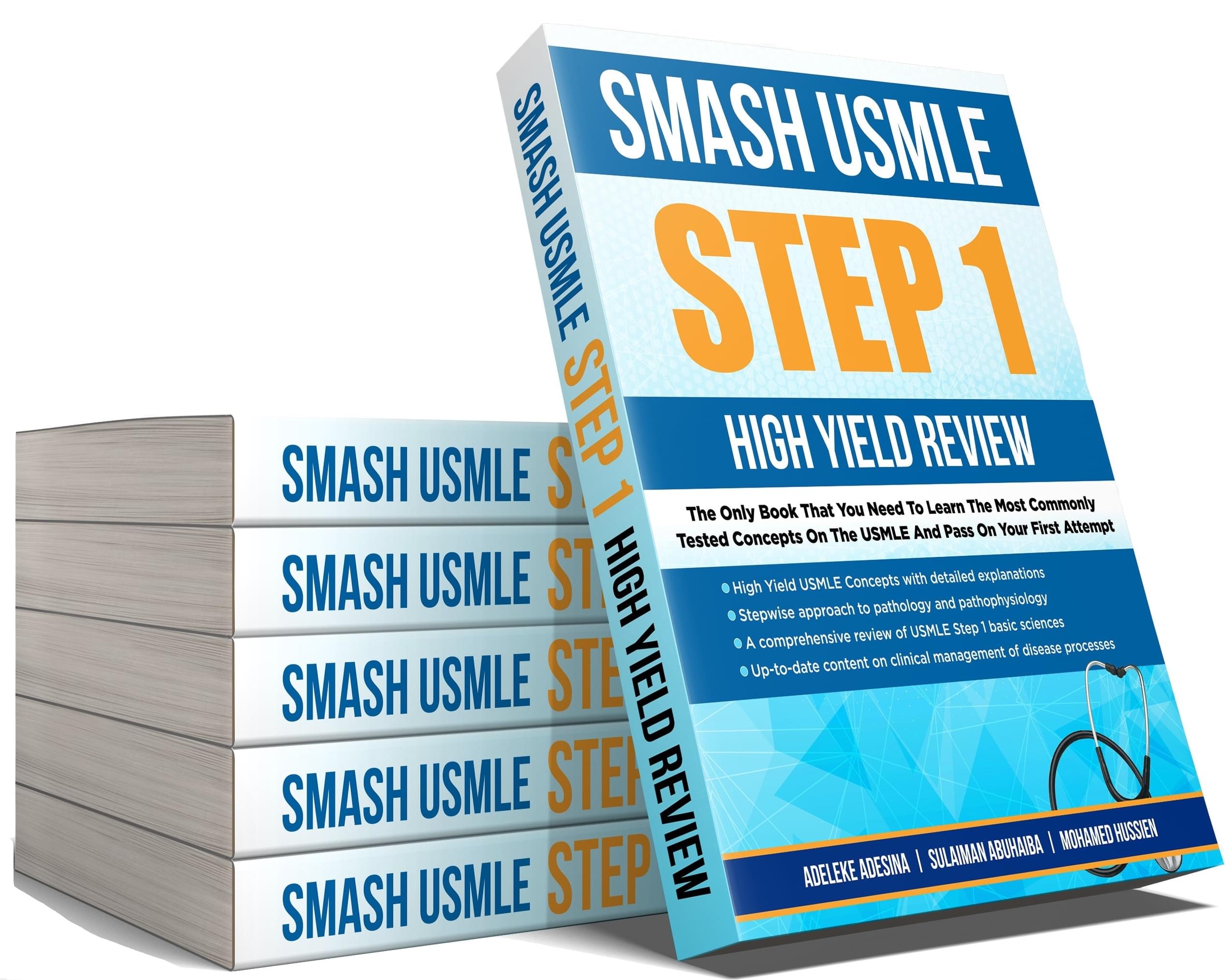
The High Yield Step 1 Review Book can help you organize endocrine topics, classic presentations, and board-style mechanisms without getting buried in low-yield details.
Get the High Yield Step 1 Review BookHigh-Yield Endocrine Topics: Calcium and Parathyroid Disorders
Calcium regulation is one of the endocrine topics students often miss because it requires tracking calcium, phosphate, PTH, and vitamin D together.
Primary Hyperparathyroidism
Primary hyperparathyroidism causes high calcium, low phosphate, and high PTH. Classic symptoms include stones, bones, abdominal groans, and psychiatric overtones.
Secondary Hyperparathyroidism
Secondary hyperparathyroidism is often due to chronic kidney disease. Phosphate rises, calcium falls, and PTH increases in response.
Vitamin D Deficiency
Vitamin D deficiency causes poor mineralization. In children, this is rickets. In adults, this is osteomalacia.
High-Yield Endocrine Topics: Pituitary Disorders
Pituitary disorders are high-yield endocrine topics because they test localization, feedback loops, and hormone excess or deficiency.
Endocrine Topics in Prolactinoma
High prolactin suppresses GnRH, causing decreased LH and FSH. Patients may present with galactorrhea, amenorrhea, infertility, or decreased libido.
Endocrine Topics in Acromegaly
Growth hormone excess after epiphyseal closure causes enlarged hands, coarse facial features, jaw enlargement, insulin resistance, and cardiomyopathy. IGF-1 is the screening test.
SIADH vs Diabetes Insipidus
SIADH causes water retention, hyponatremia, low serum osmolality, and concentrated urine. Diabetes insipidus causes polyuria, hypernatremia, high serum osmolality, and dilute urine.
USMLE-Style Question on Endocrine Topics
A 19-year-old patient presents with vomiting, abdominal pain, dehydration, deep respirations, and serum glucose of 510 mg/dL. Labs show an anion gap metabolic acidosis and elevated serum ketones. After IV fluids, insulin is started. Which electrolyte must be monitored most closely?
Answer: Potassium.
Explanation: In DKA, total body potassium is depleted even if serum potassium appears normal or high. Insulin shifts potassium into cells, which can rapidly produce hypokalemia.
Student Success Story
From Confused to Confident on USMLE Prep
This student success story highlights how structured guidance, accountability, and high-yield review can help medical students rebuild confidence before exam day.
Want a Step 1 Plan That Fits Your Weak Areas?
Join the free bootcamp and learn how to turn missed questions into a focused study roadmap.
Join the Free BootcampNeed More Structure? Explore the Step 1 Course
The SmashUSMLE Step 1 Course helps students review endocrine topics, strengthen clinical reasoning, and stay accountable through a structured study plan.
Explore the Step 1 Course Ask About TutoringFrequently Asked Questions About Endocrine Topics
What endocrine topics are highest yield for USMLE Step 1?
The highest-yield endocrine topics include thyroid disorders, adrenal disorders, diabetes mellitus, calcium and parathyroid disorders, pituitary disease, and endocrine pharmacology.
How should I study endocrine topics for Step 1?
Study endocrine topics by focusing on feedback loops, hormone receptors, lab patterns, and clinical vignettes instead of memorizing isolated facts.
Are thyroid disorders high yield for Step 1?
Yes. Thyroid disorders are among the most frequently tested endocrine topics because they involve physiology, immunology, pathology, and pharmacology.
Why do students miss endocrine questions?
Students often miss endocrine questions because they do not connect symptoms, hormone changes, feedback loops, and lab values together.
Should I memorize diabetes drugs for Step 1?
Yes, but focus on mechanism, adverse effects, and clinical clues rather than memorizing drug names alone.
Ready to Improve Your USMLE Scores?
Get physician-led guidance, high-yield study structure, and support for your next phase of USMLE preparation.
Join Free Bootcamp Explore Courses Book Tutoring