

Clinical reasoning mistakes that hurt Step 1 scores are often the reason students miss questions they actually had enough knowledge to answer correctly.
Step 1 does not only test whether you memorized facts. It tests whether you can apply those facts inside a clinical vignette under pressure.
Many students keep adding more resources when the real issue is their question strategy. They know the disease. They recognize the buzzword. However, they still choose the wrong answer because their reasoning process breaks down.
This article breaks down the most common clinical reasoning mistakes and shows you how to fix them before they damage your NBME performance.
Free USMLE Training
Free USMLE Step 1 Bootcamp
Join our free USMLE masterclass where we break down high-yield concepts, NBME strategies, and clinical reasoning systems used by thousands of medical students and IMGs.
Reserve My Spot1. Jumping to the Diagnosis Too Early
One of the biggest clinical reasoning mistakes is deciding the diagnosis before reading the entire question. This usually happens when one familiar clue appears early in the vignette.
For example, a student may see chest pain and immediately think myocardial infarction. However, the question may actually be testing pericarditis, pulmonary embolism, aortic dissection, or panic disorder.
How to Fix It
Read the last sentence first. Then read the vignette with that task in mind. This keeps your brain focused on what the question is truly asking.
2. Ignoring the Last Line of the Question
The last line tells you the job. It may ask for the diagnosis, mechanism, next step, risk factor, complication, or underlying pathology.
Many students understand the case but answer the wrong task. As a result, they pick a true statement that does not answer the actual question.
Step 1 Rule
Before looking at the answer choices, restate the last line in your own words. Ask yourself, “What exactly do they want from me?”
3. Matching Buzzwords Instead of Mechanisms
Buzzwords can help, but they can also trap you. Step 1 questions are written to test deeper understanding instead of simple recall.
Therefore, do not stop at the buzzword. Ask what process explains the patient’s presentation.
- What organ system is involved?
- What is the underlying mechanism?
- What would happen next if the disease progressed?
- Which answer best explains the entire vignette?
4. Letting One Detail Overpower the Whole Case
Some students overvalue one abnormal lab, symptom, or physical exam finding. However, Step 1 answers usually depend on the full clinical pattern.
A single clue may be included to redirect you, but the correct answer must fit the entire vignette.
Build a One-Sentence Case Summary
Before answering, summarize the case in one sentence. For example: “This is a young patient with recurrent infections, absent tonsils, and low immunoglobulins.”
That short summary keeps you anchored and prevents you from chasing isolated clues.
5. Changing Answers Without a Strong Reason
Changing an answer is not always bad. However, changing it because of anxiety usually hurts your score.
If your first answer was based on a clear clinical pattern, do not abandon it just because another option sounds familiar.
When Should You Change an Answer?
Only change an answer when you can identify a specific clue you missed. Otherwise, trust the reasoning process that led you to your original choice.
6. Not Reviewing Missed Questions Correctly
Reviewing questions is where most score improvement happens. Still, many students only read the explanation and move on.
That is not enough. You need to identify why you missed the question.
- Did you miss the diagnosis?
- Did you misunderstand the mechanism?
- Did you ignore the last line?
- Did you fall for a distractor?
- Did you know the topic but choose too fast?
Better Review Question
Ask, “What thinking error caused me to miss this?” Do not only ask, “What fact did I forget?”
High-Yield Step 1 Resource
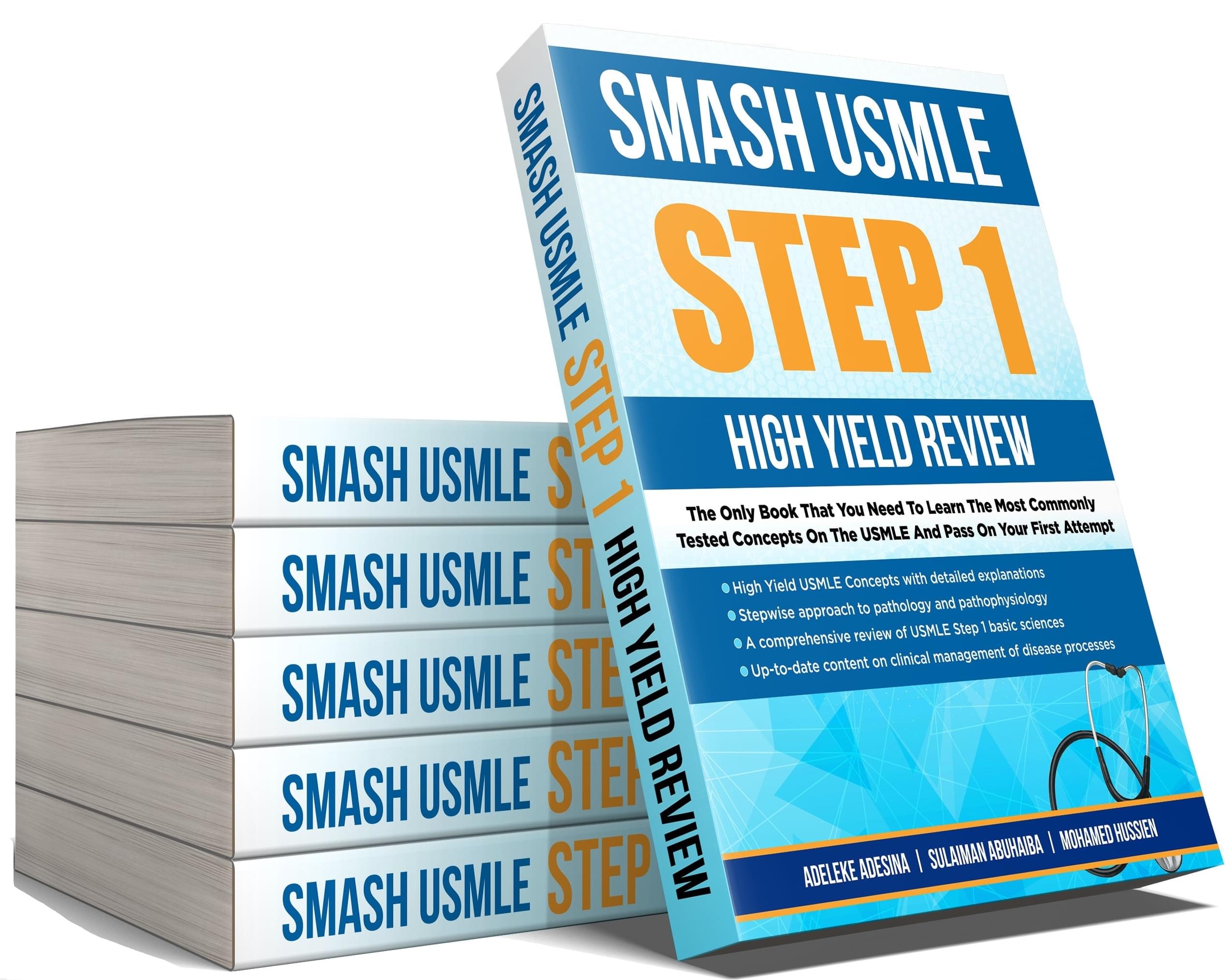
SmashUSMLE High Yield Step 1 Book
If you need a focused Step 1 review resource, use the SmashUSMLE High Yield Step 1 Book to organize the concepts, patterns, and reasoning points that matter most.
- Strengthen high-yield Step 1 foundations
- Review core systems more efficiently
- Connect concepts to NBME-style reasoning
- Use alongside SmashUSMLE, NBME review, and QBank practice
Student Success Story
⭐ 4.8 Google Rating | 120+ ReviewsStudent Success Testimonial
See how structured USMLE preparation, clinical reasoning, and focused review can help students move forward with confidence.
Need Help Improving Your Clinical Reasoning?
If you keep missing questions even when you know the topic, the issue may not be your memory. It may be your reasoning process.
SmashUSMLE Reviews helps students improve NBME strategy, clinical reasoning, weak-area analysis, and question interpretation.
FAQ: Clinical Reasoning Mistakes on Step 1
Why do I miss Step 1 questions even when I know the topic?
You may know the content but struggle to apply it inside clinical vignettes. This usually happens when you focus on buzzwords instead of the full mechanism.
What is the biggest Step 1 reasoning mistake?
One of the biggest mistakes is jumping to a diagnosis too early before reading the full question and identifying the actual task.
How should I review missed Step 1 questions?
Review the reason you missed the question. Separate content gaps from reasoning errors, distractor traps, timing issues, and misread stems.
Can clinical reasoning improve my NBME scores?
Yes. Stronger clinical reasoning helps you interpret vignettes faster, avoid distractors, and connect foundational science to the answer choices.
Ready to Improve Your USMLE Scores?
Step 1 preparation becomes easier when you stop studying randomly and start using a system. Join thousands of medical students and IMGs using SmashUSMLE’s clinical reasoning system.