
How to write a strong personal statement for residency is one of the most important skills medical students and IMGs need during the Match process.
Your personal statement is not supposed to repeat your CV. It should explain who you are, why your specialty makes sense, what shaped you, and why you are ready for residency.
Many applicants write vague statements filled with phrases like “I am passionate,” “I want to help people,” and “medicine is my calling.” Those ideas may be true, but they are not enough.
A strong residency personal statement is specific, honest, focused, and mature. It helps programs understand your story quickly.
Free USMLE Training
Free USMLE Bootcamp
Join our free USMLE masterclass where we break down high-yield concepts, NBME strategies, and clinical reasoning systems used by thousands of medical students and IMGs.
Reserve My SpotWhat a Residency Personal Statement Should Do
Your personal statement should help residency programs understand the person behind the application.
It should answer four major questions:
- Why are you choosing this specialty?
- What experiences shaped your decision?
- What strengths will you bring to residency?
- Why are you ready for this next level of training?
The Big Rule
Your personal statement should make your application easier to understand, not harder to follow.
The Best Personal Statement Structure
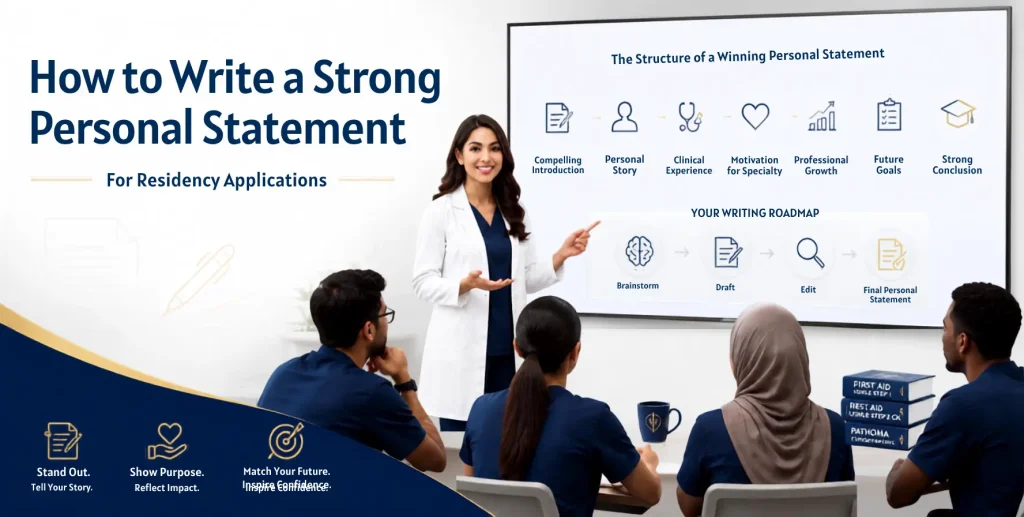
A strong residency personal statement usually follows a simple structure. You do not need a complicated essay. You need a clear one.
| Section | Purpose | What to Include |
|---|---|---|
| Opening | Introduce your story | A specific moment, insight, or experience connected to your specialty. |
| Middle | Show growth and evidence | Clinical experiences, patient care lessons, teamwork, resilience, and specialty fit. |
| Application Fit | Connect your story to residency | What you are looking for in training and what you will contribute. |
| Closing | End with confidence | A mature summary of your readiness and goals. |
How to Write a Strong Opening
Your opening should not sound dramatic just to get attention. It should feel real and connected to your specialty choice.
Avoid starting with generic childhood memories unless they directly explain your current path. Programs have read thousands of essays that begin with wanting to become a doctor since childhood.
Better Opening Options
- A clinical moment that changed how you saw the specialty.
- A patient encounter that taught you something specific.
- A moment where your strengths matched the specialty.
- A challenge that shaped your maturity and direction.
Opening Rule
Start with something specific. Specific writing feels believable. Generic writing feels forgettable.
How to Show Specialty Fit
Residency programs want to know that your specialty choice makes sense. Your personal statement should show that you understand the field and have real reasons for choosing it.
Do not just say you love the specialty. Explain what parts of the specialty fit your skills, values, and clinical experiences.
Ways to Show Specialty Fit
- Describe what you enjoy about the patient population.
- Explain what clinical problems interest you.
- Connect your strengths to the demands of the specialty.
- Use examples from rotations, electives, research, or work experience.
- Show that you understand the reality of the specialty, not just the attractive parts.
How to Use Clinical Stories
Clinical stories can make your personal statement stronger, but only if they are used correctly.
The story should not be mainly about how impressive the case was. It should show what you learned, how you thought, how you grew, or why the specialty became clearer to you.
A Strong Clinical Story Should Show
- What happened briefly.
- What role you played.
- What you learned.
- How it connects to your specialty choice.
- How it shaped the kind of resident you want to become.
Clinical Story Rule
Do not make the patient story the whole essay. Use it to reveal something meaningful about you.
How to Address Red Flags
Some applicants need to address a red flag, such as a USMLE failure, academic difficulty, graduation gap, leave of absence, or unusual career path.
Not every red flag belongs in the personal statement. But when it clearly affects your application, it may need a brief, mature explanation.
How to Address a Red Flag
- Be brief.
- Be honest.
- Do not blame others.
- Show what changed.
- Redirect back to readiness for residency.
Red Flag Rule
Do not turn your personal statement into an apology letter. Address the issue, show growth, and move forward.
Personal Statement Tips for IMGs
For IMGs, the personal statement can help connect your international medical background to your readiness for U.S. residency training.
Your goal is to sound confident, not defensive. You do not need to overexplain every part of your journey. You need to show maturity, preparation, and fit.
IMG Personal Statement Priorities
- Explain your specialty choice clearly.
- Show recent clinical growth and U.S. clinical exposure when relevant.
- Connect your background to strengths, not excuses.
- Avoid sounding desperate for any residency position.
- Show that you understand U.S. training expectations.
- Keep the tone professional, direct, and mature.
Common Personal Statement Mistakes
1. Repeating the CV
Your personal statement should not list your accomplishments. ERAS already does that. Use the essay to explain your story and fit.
2. Writing Too Generally
Phrases like “I am passionate about medicine” do not help unless they are supported by specific examples.
3. Overusing Patient Stories
Patient stories should support your message. They should not take over the essay.
4. Sounding Desperate
Programs want confident applicants who are ready to train, not applicants begging for a chance.
5. Ignoring Grammar and Flow
Poor writing can make strong applicants look careless. Edit carefully and get feedback from someone who understands residency applications.
Student Success Story
⭐ 4.8 Google Rating | 120+ ReviewsSee How SmashUSMLE Students Improve Their Scores
Learn how structured clinical reasoning, NBME-focused review, and disciplined preparation can help IMGs break through score plateaus.
Want to learn the same clinical reasoning system used by SmashUSMLE students?
Join Free BootcampNeed Help Preparing for Residency Applications?
If you are preparing for USMLE exams, ERAS, interviews, or Match strategy, you need more than random advice. You need a clear plan.
SmashUSMLE Reviews helps medical students and IMGs strengthen USMLE preparation, clinical reasoning, NBME performance, application readiness, and interview confidence.
FAQ: How to Write a Strong Personal Statement for Residency
What makes a residency personal statement strong?
A strong residency personal statement tells a clear story, explains specialty fit, uses specific examples, shows maturity, and helps programs understand why the applicant is ready for residency.
How long should a residency personal statement be?
Most residency personal statements should be about one page. The goal is to be focused, clear, and easy to read.
Should I talk about a red flag in my personal statement?
Only address a red flag if it is important to explain your application. Keep it brief, honest, accountable, and focused on growth.
Should IMGs mention their international background?
Yes, if it strengthens the story. IMGs should connect their background to growth, clinical maturity, resilience, and readiness for U.S. residency training.
What should I avoid in a personal statement?
Avoid generic language, repeating your CV, exaggeration, blaming others, sounding desperate, and writing an essay that does not clearly connect to your specialty.
Ready to Build a Stronger Residency Application?
Your personal statement is only one part of the Match, but it can make your application clearer, stronger, and more memorable when it is written with strategy.