
How to build a strong residency application as an IMG is one of the biggest questions medical students and IMGs ask when planning their residency application.
USMLE scores matter because they help programs compare applicants, especially for competitive specialties and applicants with international medical training.
But scores are not the whole application. Residency programs also look at clinical experience, letters of recommendation, research, personal statement, professionalism, and interview performance.
A strong residency application should show more than a passing score or a high Step 2 CK result. It should prove that you are clinically prepared, dependable, coachable, and ready to succeed in residency.
Free USMLE Training
Free USMLE Bootcamp
Join our free USMLE masterclass where we break down high-yield concepts, NBME strategies, and clinical reasoning systems used by thousands of medical students and IMGs.
Reserve My SpotWhat Makes a Strong IMG Residency Application?
A strong IMG residency application does not happen by accident. It is built with intention.
The strongest applications show that the applicant understands the specialty, has prepared for U.S. clinical training, and can communicate their story clearly.
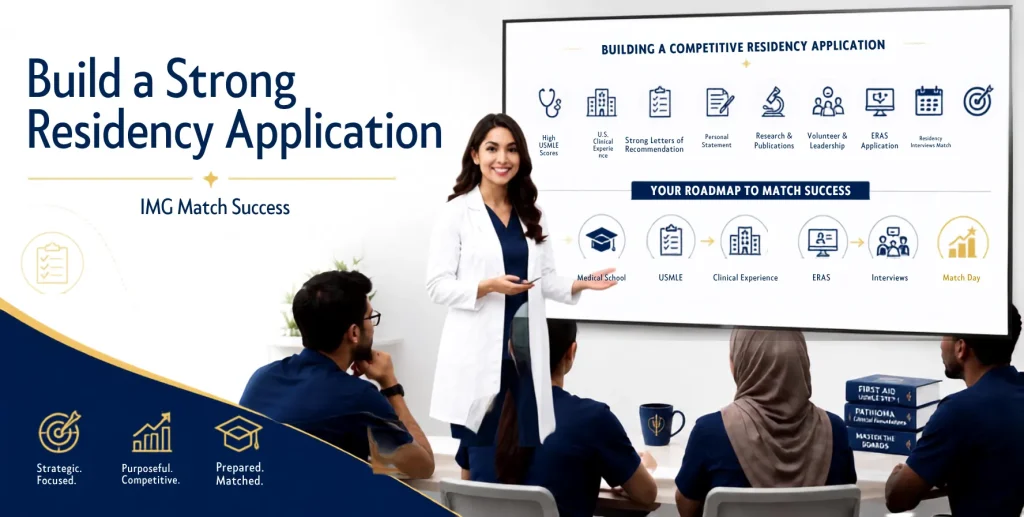
- Strong USMLE performance
- Meaningful U.S. clinical experience
- Detailed letters of recommendation
- A focused personal statement
- A clean and honest CV
- Research, service, or leadership that supports your story
- A realistic program list
- Strong interview preparation
The Big Rule
Your application should not feel like random achievements. It should feel like a clear story that proves you are ready for residency.
Build Strong USMLE Performance
USMLE scores remain one of the most important screening factors for IMGs. Strong scores can help your application get reviewed, but weak preparation can limit your options.
Your goal should be to prepare with a system, not panic-study with random resources.
IMG USMLE Strategy
- Use NBME exams to identify weak areas early.
- Build clinical reasoning, not just memorized facts.
- Review missed questions by pattern and mechanism.
- Use structured courses and tutoring if your scores are stuck.
- Protect your timeline so you do not rush into an exam unprepared.
USMLE Application Rule
Your USMLE performance should support your application, not create doubt. Do not take an exam just because you are tired of studying.
Get Meaningful U.S. Clinical Experience
U.S. clinical experience helps programs see that you understand clinical workflow, communication, documentation, professionalism, and team-based care in the United States.
The best experience is not just something you list. It is something that leads to growth, confidence, and strong letters.
| Experience Type | Why It Helps | How to Use It Well |
|---|---|---|
| Hands-On Rotation | Shows direct clinical readiness | Be prepared, ask for feedback, and aim for a detailed letter. |
| Observership | Shows exposure to U.S. medicine | Be engaged, professional, and consistent. |
| Externship | Can strengthen specialty fit | Connect the experience to your personal statement and interview story. |
| Research Role | Builds academic credibility | Try to produce posters, abstracts, or publications. |
Secure Strong Letters of Recommendation
Letters of recommendation are one of the most important parts of an IMG application because they give programs outside confirmation of your clinical ability and professionalism.
A strong letter should describe how you think, communicate, improve, and work with a team.
How to Earn Stronger Letters
- Show up prepared every day.
- Present patients clearly and honestly.
- Ask for feedback and apply it quickly.
- Be respectful to every member of the team.
- Ask for letters from physicians who truly know your work.
Letter Rule
A detailed letter from someone who worked with you closely is stronger than a vague letter from someone with a bigger title.
Write a Focused Personal Statement
Your personal statement should not sound like every other IMG personal statement. It should explain your path, your specialty choice, your growth, and your readiness.
The goal is not to impress programs with dramatic language. The goal is to sound mature, clear, and believable.
What to Include
- Why you chose the specialty
- What clinical experiences shaped your decision
- How your background has prepared you
- What you learned from challenges or gaps
- Why you are ready for residency now
Personal Statement Rule
Do not write a generic essay. Write a focused application story that only you could write.
Build a Clean Residency CV
Your CV should be clean, honest, organized, and easy to scan. Residency programs do not want confusion. They want clarity.
Avoid exaggerating roles or filling the CV with weak activities that do not add value.
IMG CV Priorities
- List education and training clearly.
- Explain clinical experience accurately.
- Include research, posters, publications, and quality projects.
- Highlight leadership, teaching, service, and volunteer work.
- Be honest about dates and gaps.
Use Research and Volunteer Work Strategically
Research, volunteering, and leadership can strengthen an IMG application when they support your specialty interest and show consistency.
These activities should not feel random. They should help programs understand who you are and what kind of resident you may become.
- Case reports
- Poster presentations
- Quality improvement projects
- Community health work
- Teaching and mentoring
- Specialty-related volunteer work
Apply to the Right Programs
A strong application can still fail if the program list is poorly built. IMGs should apply with strategy, not emotion.
Look for programs that match your profile, specialty goals, visa needs, graduation year, USMLE performance, and clinical background.
| Program Factor | Why It Matters | IMG Strategy |
|---|---|---|
| IMG History | Shows whether the program has matched IMGs before | Prioritize programs with current or recent IMG residents. |
| Visa Policy | Determines eligibility for some applicants | Confirm sponsorship policies before applying. |
| Year of Graduation | Some programs screen older graduates | Target programs that fit your timeline. |
| USMLE Filters | Scores may affect interview chances | Apply realistically based on your full profile. |
Prepare Your Interview Story
Your interview should confirm the strength of your application. This is where programs decide whether your paper application matches the person they are speaking with.
You need to explain your journey clearly, including your strengths, challenges, specialty interest, and readiness for residency.
Questions Every IMG Should Prepare
- Tell me about yourself.
- Why this specialty?
- Why are you interested in our program?
- Tell me about your U.S. clinical experience.
- How have you prepared for residency?
- Tell me about a challenge you overcame.
- What are your long-term career goals?
Interview Rule
Do not memorize robotic answers. Build clear talking points so you sound prepared, honest, and confident.
Common IMG Application Mistakes
1. Building the Application Too Late
A strong application takes time. Start planning your scores, clinical experience, letters, and personal statement early.
2. Depending Only on Scores
Strong scores help, but they do not replace U.S. clinical experience, strong letters, and a clear application story.
3. Using Generic Documents
Generic personal statements and vague CV descriptions make your application forgettable.
4. Applying Randomly
Applying to the wrong programs wastes money and lowers your chances. Build a targeted list.
5. Ignoring Interview Preparation
Many IMGs prepare the application but neglect the interview. That is a mistake. Interviews can make or break your Match.
Student Success Story
⭐ 4.8 Google Rating | 120+ ReviewsSee How SmashUSMLE Students Improve Their Scores
Learn how structured clinical reasoning, NBME-focused review, and disciplined preparation can help IMGs break through score plateaus.
Want to learn the same clinical reasoning system used by SmashUSMLE students?
Join Free BootcampNeed Help Building a Strong IMG Application?
If you are an IMG trying to prepare for USMLE exams, strengthen your clinical reasoning, improve your application, or prepare for the Match, you do not need to figure it out alone.
SmashUSMLE Reviews helps IMGs prepare for Step 1, Step 2 CK, Step 3, NBME exams, clinical reasoning, and residency readiness with structured courses, QBank practice, and one-on-one tutoring.
FAQ: How to Build a Strong Residency Application as an IMG
How can an IMG build a strong residency application?
An IMG can build a strong residency application by improving USMLE performance, gaining U.S. clinical experience, earning strong letters, writing a focused personal statement, building a clean CV, applying strategically, and preparing well for interviews.
What is the most important part of an IMG application?
There is no single part. USMLE scores, clinical experience, letters, personal statement, program fit, and interviews all work together.
Do IMGs need U.S. clinical experience?
U.S. clinical experience is highly valuable because it shows exposure to U.S. healthcare, communication expectations, clinical workflow, and team-based care.
How important are letters of recommendation for IMGs?
Strong letters are very important because they give programs direct evidence of your clinical performance, professionalism, and readiness for residency.
Should IMGs apply to every program?
No. IMGs should apply strategically to programs that fit their profile, visa status, scores, graduation year, clinical experience, and specialty goals.
When should IMGs start building their residency application?
IMGs should start early, ideally while preparing for USMLE exams, because clinical experience, letters, research, CV building, and interview preparation all take time.
Ready to Build a Stronger IMG Residency Application?
Your residency application becomes stronger when you stop guessing and start building a clear system. Strengthen your USMLE foundation, clinical reasoning, application story, and Match strategy with SmashUSMLE Reviews.