

Written by Dr. Adeleke Adesina, DO, FACEP, FAAEM
Board-Certified Emergency Medicine Physician
Founder, SmashUSMLE Reviews
⭐ 4.8 Google Rating | 120+ Reviews
I hope you enjoy reading this article. If you need USMLE help, schedule a one-on-one free consult below.
Book a USMLE Advising CallWhy IMGs struggle with clinical reasoning on the USMLE often has less to do with intelligence and more to do with how the exam asks questions. Many international medical graduates know the disease, recognize the buzzwords, and have strong textbook knowledge, but still miss NBME-style questions because they choose the answer too early.
The USMLE does not simply ask, “Do you know this condition?” It asks whether you can identify the patient’s problem, prioritize the next step, avoid tempting distractors, and think like a physician under time pressure.
The solution is not memorizing more random facts. The solution is learning a repeatable clinical reasoning framework: chief complaint, risk factors, time course, mechanism, diagnosis, complication, and management priority.
In this article, we will break down the most common reasons IMGs lose points on clinical reasoning questions and how to rebuild your approach for Step 1, Step 2 CK, and Step 3.
Table of Contents
Free USMLE Step 1 Bootcamp
Learn how to approach USMLE questions with a clinical reasoning system instead of guessing between two answers.
Reserve My SpotWhy IMGs Struggle With Clinical Reasoning on the USMLE
Many IMGs are trained in systems where exams reward recall, definitions, and recognition. The USMLE rewards application. That difference matters.
An IMG may know that ulcerative colitis causes bloody diarrhea, but the USMLE may ask about toxic megacolon, colorectal cancer surveillance, primary sclerosing cholangitis, or the next best step in acute management. The disease label is only the beginning.
The USMLE Tests Decisions, Not Just Diagnoses
Clinical reasoning means you can answer three questions:
- What is happening to this patient?
- Why is it happening?
- What should I do next?
IMGs often get the first question right but lose points on the second or third. That is why two answer choices may both seem correct. One is true, but the other is the best next step for this patient right now.
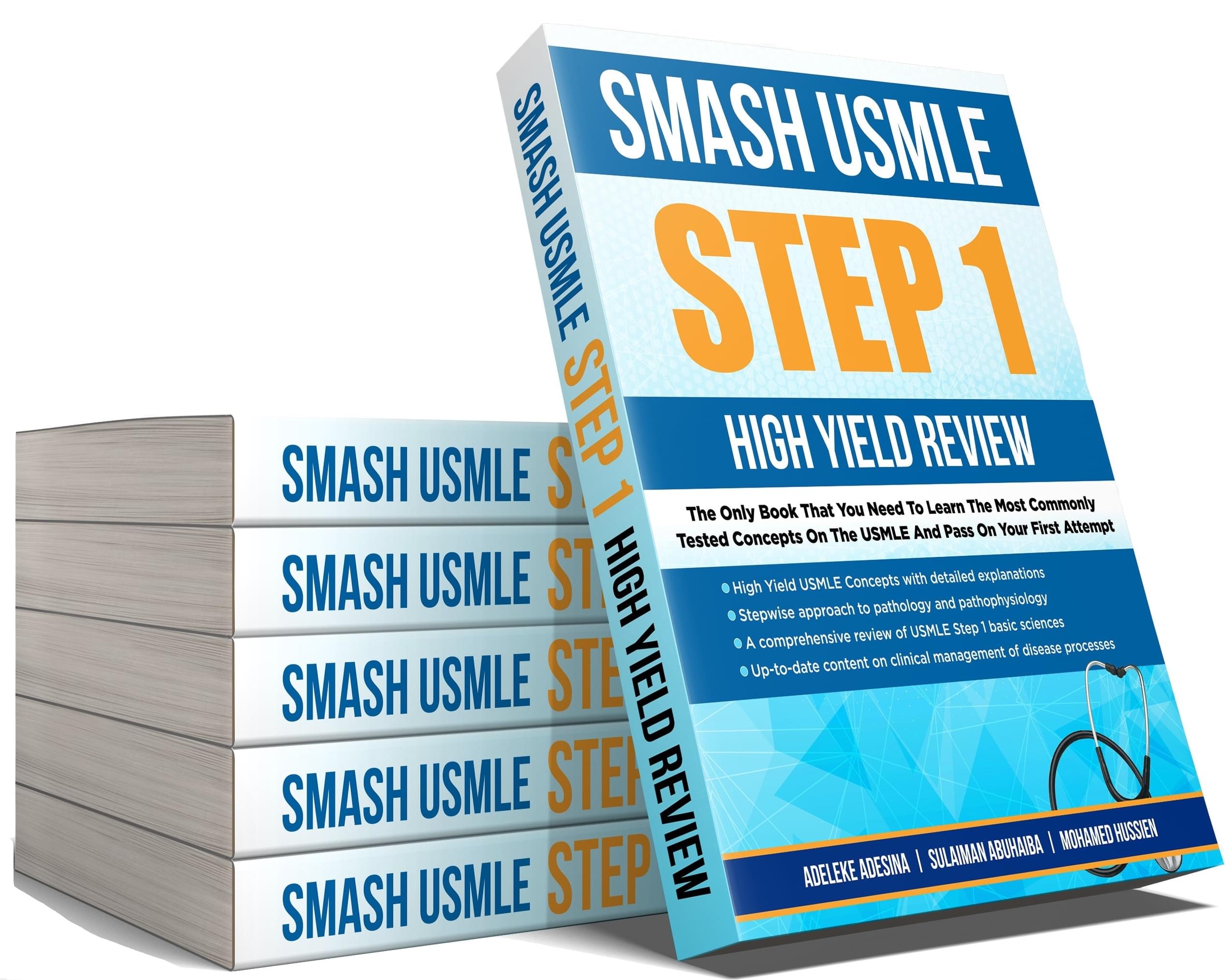
Recommended Resource: High Yield Step 1 Review Book
The High Yield Step 1 Review Book can be used as a quick framework tool when you need to connect mechanisms to clinical presentations instead of memorizing isolated facts.
View the Step 1 BookCommon Clinical Reasoning Mistakes IMGs Make
1. Reading the Question Like a Textbook
USMLE stems are written like clinical encounters. The patient does not walk in saying, “I have nephritic syndrome.” The patient presents with edema, hypertension, hematuria, and a recent infection.
2. Chasing Buzzwords Too Quickly
Buzzwords can help, but they can also trap you. If you jump at one clue, you may ignore the time course, age, risk factors, or vital signs.
3. Not Separating Diagnosis From Management
Step 2 CK and Step 3 often punish students who identify the disease but choose the wrong action. Knowing pulmonary embolism is not enough. You must know when to anticoagulate, image, thrombolyse, or stabilize first.
4. Weak Pathophysiology Links
Step 1 clinical reasoning depends on mechanism. Mechanism turns memorization into prediction.
| Weak Approach | Stronger USMLE Approach |
|---|---|
| Look for a memorized disease name | Build a problem representation from the stem |
| Pick the familiar answer | Ask what the question is truly testing |
| Study more facts only | Connect facts to mechanisms and decisions |
| Review only explanations | Review why your reasoning pathway failed |
A Better USMLE Question Method for IMGs
Step 1: Identify the Patient Script
Age, sex, setting, risk factors, and time course usually tell you the clinical lane. A 68-year-old smoker with weight loss and hypercalcemia is not the same patient as a 22-year-old with acute pleuritic chest pain after a viral illness.
Step 2: Name the Syndrome Before the Diagnosis
Instead of jumping to “lupus,” say: young woman, multisystem disease, kidney involvement, autoimmunity. This protects you from distractors.
Step 3: Predict the Answer
Before reading the choices, decide whether the question is asking for diagnosis, mechanism, next step, complication, or prevention.
Step 4: Eliminate by Clinical Priority
On management questions, ask: Is the patient stable? Is this emergency treatment, confirmation testing, prevention, or long-term therapy?
USMLE-Style Clinical Reasoning Example
A 54-year-old man presents with crushing chest pain, diaphoresis, and hypotension. ECG shows ST elevation in II, III, and aVF. He becomes lightheaded after receiving nitroglycerin.
Weak reasoning: Inferior MI equals standard ACS treatment.
Stronger reasoning: Inferior MI plus hypotension after nitroglycerin suggests right ventricular infarction. The preload-dependent right ventricle cannot tolerate venodilation.
Clinical reasoning lesson: The answer depends on physiology and patient stability, not just the diagnosis label.
Download the Clinical Reasoning Worksheet
Use this worksheet to break USMLE questions into chief complaint, time course, mechanism, diagnosis, and next best step.
Get the Worksheet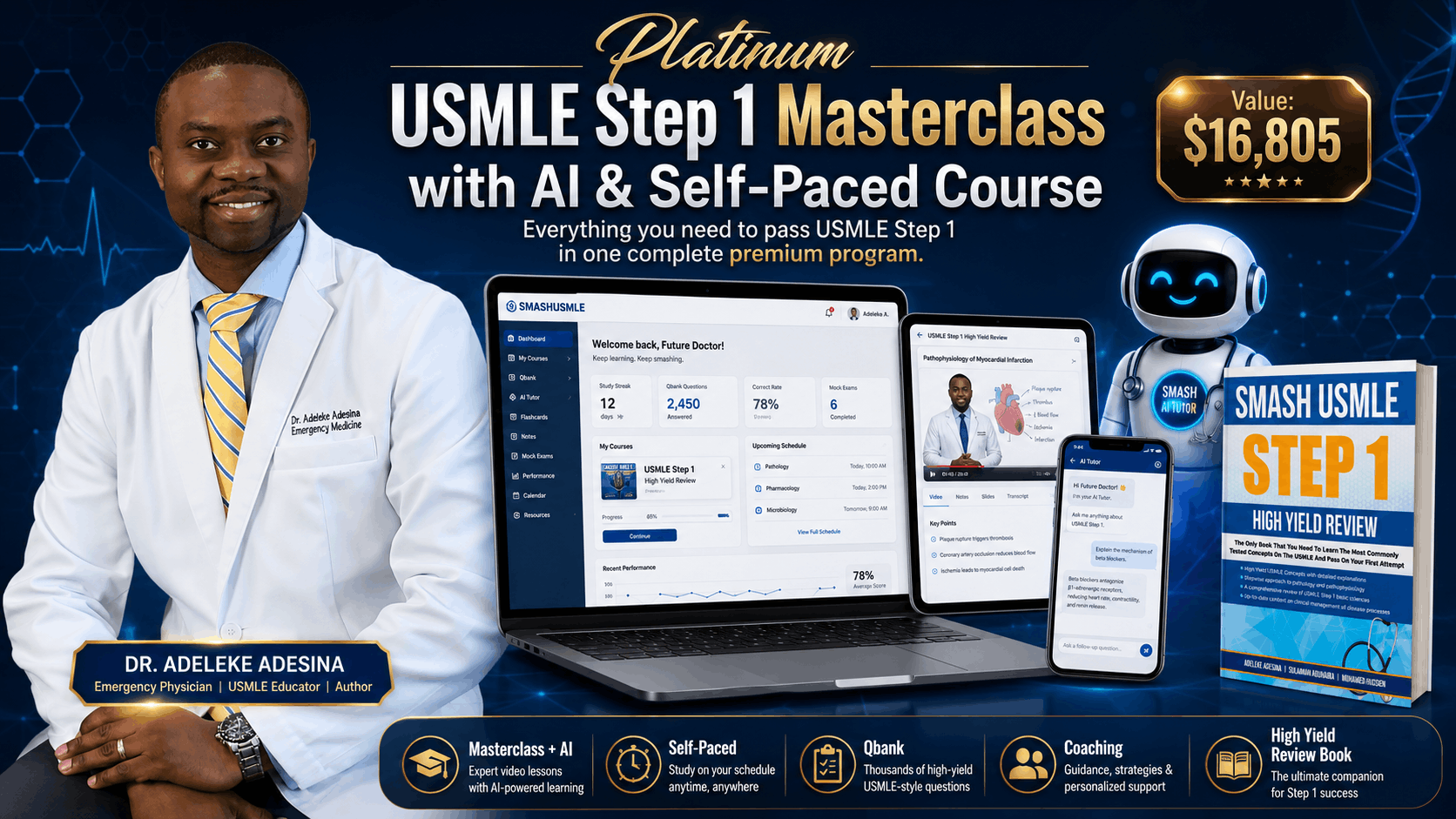
Master Clinical Reasoning With AI + Self-Paced Step 1 Training
For IMGs who need structure, the Step 1 Masterclass combines physician-led strategy, AI-supported learning, and self-paced review so you can strengthen mechanisms, question interpretation, and NBME-style decision-making.
- Self-paced Step 1 course access
- AI-supported study reinforcement
- High-yield clinical reasoning approach
- Designed for students who need structure and repetition
How IMGs Can Improve Clinical Reasoning for the USMLE
Review Questions Differently
Do not only ask, “What fact did I miss?” Ask, “Where did my reasoning break?” Did you misread the diagnosis? Did you ignore instability? Did you choose a test when treatment was needed?
Build Illness Scripts
An illness script is a compact mental model of a disease: who gets it, how it presents, what causes it, what confirms it, and what treats it.
Use Mechanisms to Predict Findings
If you know the mechanism, you can often predict the lab abnormality, complication, or next best step even when the vignette is unfamiliar.
Practice Timed Decision-Making
Clinical reasoning must become fast. Untimed review teaches understanding, but timed blocks train decision-making under pressure.
Helpful Study Tool
The Crush Your CBSE and USMLE eBook can help organize your study plan while you build stronger clinical reasoning habits.
Dr. Badio Matched Pediatrics
Dr. Badio shares how focused guidance and a stronger study strategy helped support the journey toward matching into Pediatrics.
Want Help Building Your USMLE Game Plan?
Get physician-led guidance on how to study, review questions, and fix weak clinical reasoning patterns.
Book a Free ConsultNeed More Structured Clinical Reasoning Support?
The SmashUSMLE Step 2 CK Course and USMLE Tutoring options are designed to help students connect diagnosis, mechanism, and management in NBME-style questions.
Explore Courses View TutoringFAQ
Why do IMGs struggle with clinical reasoning on the USMLE?
Many IMGs struggle because the USMLE tests application, prioritization, and next best step decision-making rather than simple recall.
How can IMGs improve USMLE clinical reasoning?
IMGs can improve by reviewing question stems systematically, identifying illness scripts, predicting the answer before looking at choices, and analyzing why their reasoning failed after missed questions.
Is clinical reasoning more important for Step 1 or Step 2 CK?
It matters for both. Step 1 emphasizes mechanisms and pathophysiology, while Step 2 CK emphasizes diagnosis, management, patient safety, and next best step decisions.
Should IMGs memorize more facts or do more questions?
Both matter, but questions should be reviewed deeply. The goal is not just doing more questions; it is learning how the USMLE wants you to think.
Can tutoring help with clinical reasoning?
Yes. Tutoring can help identify repeated reasoning errors, rebuild question strategy, and teach a structured way to approach NBME-style vignettes.
Ready to Improve Your USMLE Scores?
Start building the clinical reasoning system you need for stronger NBME and USMLE performance.
Join Free Bootcamp Explore Courses Book Tutoring