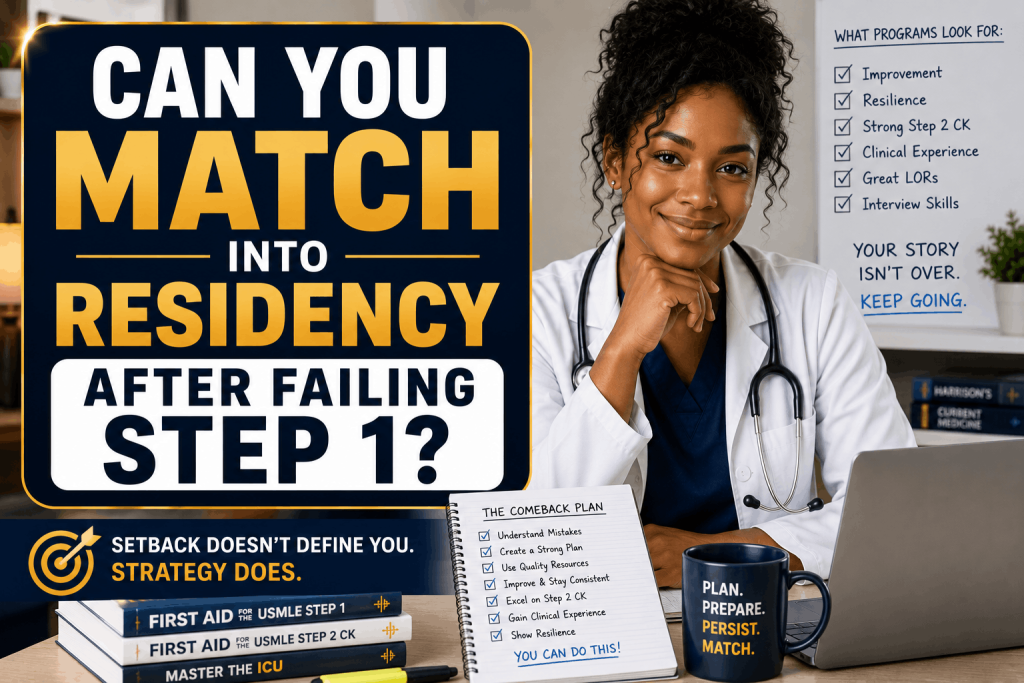

Can you match into residency after failing Step 1? Yes, it is possible, but you need to understand that a Step 1 failure becomes part of your application story and must be handled with strategy, maturity, and clear evidence of improvement.
Many students panic after a failed attempt because they think one exam result has permanently ended their dream. The bigger problem is that they retake too quickly, apply without a plan, or fail to show programs that the weakness has been corrected.
The clinical reasoning solution is to treat the failure like a diagnostic report. You need to identify why it happened, repair the weak areas, pass the retake, strengthen Step 2 CK, and build an application that proves growth.
This guide will show you what a Step 1 failure means, how residency programs may view it, how to recover academically, how to explain it, and how to build a stronger Match strategy.
Free USMLE Training
Free USMLE Step 1 Bootcamp
If you failed Step 1 or feel at risk of failing, join our free USMLE masterclass to learn how to rebuild your weak areas, improve NBME reasoning, and study with a physician-led system.
Reserve My SpotCan You Match Into Residency After Failing Step 1?
Yes. A failed Step 1 attempt does not automatically prevent you from matching into residency.
But it does create a red flag that must be addressed with a stronger application strategy. You cannot pretend it did not happen. You also should not define yourself by it.
Residency programs want evidence that you can handle the academic, clinical, and emotional demands of training. After a Step 1 failure, your job is to prove three things:
- You corrected the weakness that caused the failure.
- You can perform consistently on future exams.
- You are clinically mature, coachable, and ready for residency.
The Big Rule
A Step 1 failure is not the end of your Match journey. It is a signal that your recovery plan must be more organized than the average applicant’s plan.
What a Failed Step 1 Attempt Means for Residency
Step 1 is now pass/fail for exams taken on or after January 26, 2022, but pass/fail does not mean residency programs ignore failed attempts.
Your USMLE transcript is required by many residency programs as part of ERAS applications, so you should approach a failed attempt honestly and strategically.
| Application Area | Impact of Failed Step 1 | How to Recover |
|---|---|---|
| USMLE Transcript | The attempt history may be reviewed by programs. | Pass the retake and avoid additional exam failures. |
| Interview Selection | Some programs may screen applicants more strictly. | Apply strategically and strengthen the rest of your file. |
| Step 2 CK | Step 2 CK becomes a major opportunity to show improvement. | Prepare early and aim for a strong first-pass performance. |
| Personal Statement | You may need to address the setback briefly. | Focus on accountability, correction, and growth. |
| Specialty Choice | Highly competitive specialties may become harder. | Build a realistic specialty and program list. |
How Program Directors May View a Step 1 Failure
Program directors do not all review applications the same way. Some programs use strict filters. Others use more holistic review.
A failed Step 1 attempt can raise concerns about medical knowledge, test-taking readiness, consistency, or risk of future board difficulty. That does not mean every door closes. It means your application must answer those concerns before they become objections.
What Programs May Want to See
- A clean Step 1 retake pass.
- A strong Step 2 CK performance.
- Strong clinical grades or evaluations.
- Supportive letters of recommendation.
- A clear explanation without excuses.
- Evidence of maturity, resilience, and improved study strategy.
Do Not Overexplain
Your explanation should be brief. Programs do not need a long emotional story. They need to know what happened, what changed, and why it will not happen again.
The Step 1 Failure Recovery Plan
The worst thing you can do after failing Step 1 is immediately repeat the same study plan with more hours.
More hours do not fix a broken strategy. You need a diagnosis.
Step 1: Identify Why You Failed
Most Step 1 failures come from one or more of these problems:
- Weak foundational science knowledge.
- Poor NBME-style question interpretation.
- Memorizing facts without clinical reasoning.
- Rushing through QBank review.
- Taking the exam before readiness was proven.
- Test anxiety, timing issues, or fatigue.
Step 2: Rebuild With a Structured System
After a failed attempt, your preparation should be NBME-driven. Use your score report, practice exam trends, and missed-question patterns to decide what to study first.
SmashUSMLE Reviews helps students rebuild with physician-led clinical reasoning, weak-area analysis, QBank practice, and one-on-one support when needed.
Step 3: Do Not Retake Until Readiness Is Clear
A second failed attempt is much harder to explain than one failed attempt followed by a strong recovery.
Before retaking, you should have consistent practice performance, improved weak areas, better timing, and a clear test-day plan.
Need a Step 1 Recovery Strategy Before You Retake?
If you failed Step 1, do not retake with the same plan. SmashUSMLE tutoring can help you identify why you failed, rebuild your weak areas, and create a safer retake strategy.
Recommended Resource
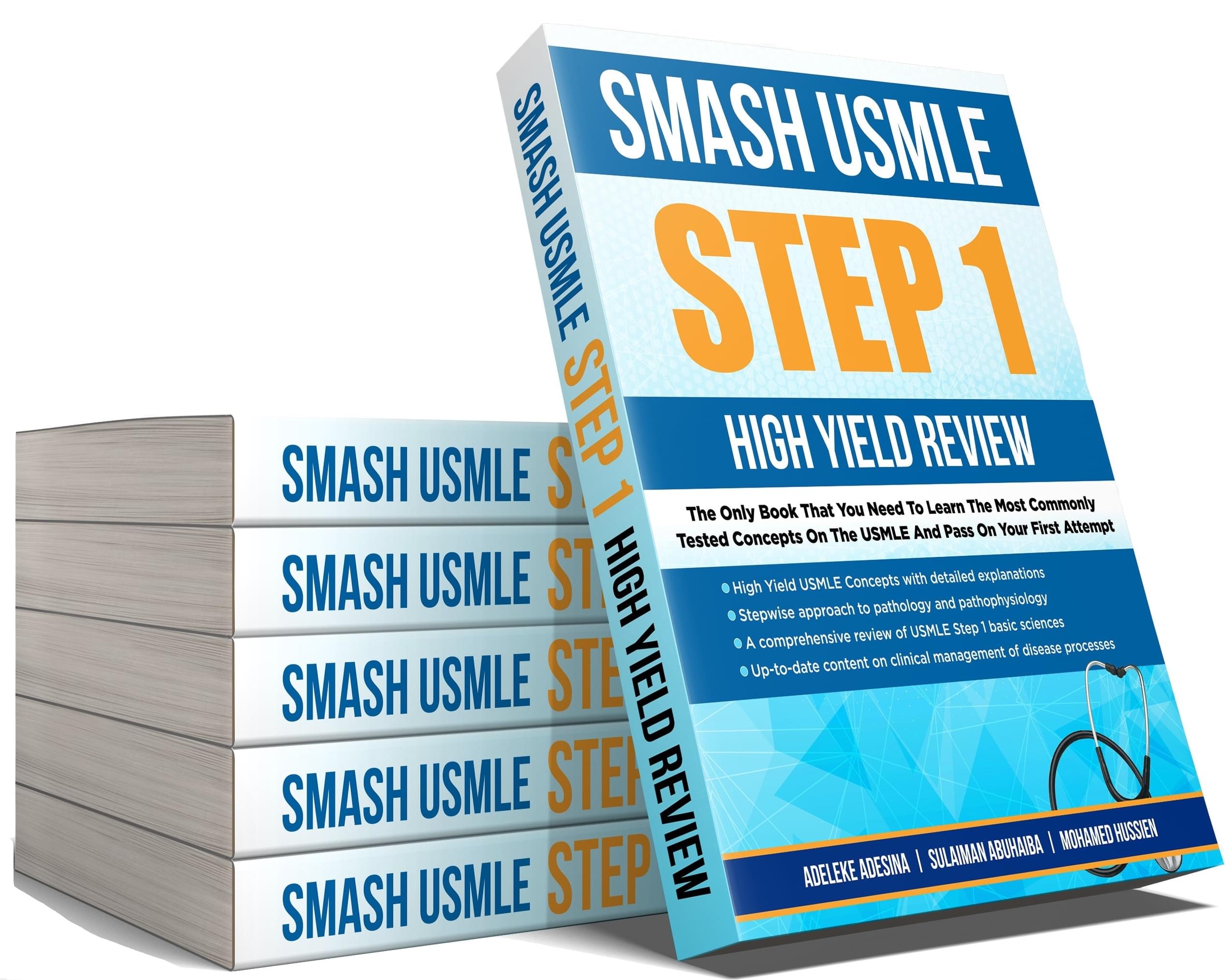
High Yield Step 1 Review Book
If your Step 1 failure came from weak foundations, the High Yield Step 1 Review Book can help you organize the core concepts, mechanisms, and clinical patterns you need before your retake.
- Review high-yield Step 1 foundations
- Connect basic science to clinical vignettes
- Use alongside NBME review and QBank practice
- Build a cleaner retake study system
Free Worksheet
Download the Step 1 Failure Recovery Worksheet
Use this worksheet to identify why you failed, organize your weak areas, plan your retake timeline, and build a stronger residency recovery strategy.
Get the Free WorksheetWhy Step 2 CK Becomes More Important After Failing Step 1
After a Step 1 failure, Step 2 CK becomes one of your most important opportunities to show academic recovery.
A strong Step 2 CK performance can help demonstrate that your Step 1 failure was not a pattern. It shows programs that you improved your knowledge, test-taking, clinical reasoning, and preparation system.
Your Step 2 CK Goal After a Step 1 Failure
- Start Step 2 CK preparation early.
- Use shelf exam performance to identify clinical weaknesses.
- Do not rush Step 2 CK just to apply faster.
- Use NBME and UWorld data to prove readiness.
- Consider tutoring if your practice scores are inconsistent.
Step 2 CK Strategy
If Step 1 created doubt, Step 2 CK should create confidence. Your goal is to give programs a reason to believe your academic trajectory has changed.
How to Build a Strong Residency Application After Failing Step 1
Matching after a Step 1 failure requires more than passing the retake. You need a complete application strategy.
1. Apply to the Right Specialties
Highly competitive specialties may be less forgiving of exam failures. You may need to consider a realistic specialty strategy based on your full profile, including clinical grades, Step 2 CK, research, letters, visa status, graduation year, and U.S. clinical experience.
2. Build a Smarter Program List
Do not apply randomly. Research programs carefully. Look for programs that appear more holistic, IMG-friendly when relevant, or aligned with your background.
3. Strengthen Clinical Letters
Strong letters can help programs see you as more than an exam attempt. Ask for letters from physicians who can speak to your work ethic, clinical judgment, professionalism, and growth.
4. Explain the Failure With Maturity
Your explanation should be honest but controlled. Avoid blaming the school, the exam, the testing center, or life circumstances in a way that sounds defensive.
Simple Explanation Framework
“I did not have the right preparation system at the time. After the result, I changed my approach, rebuilt my weak areas, worked with structured guidance, passed the retake, and used that experience to become a more disciplined learner.”
IMG Strategy After Failing Step 1
For IMGs, a Step 1 failure can be more challenging because programs may already be evaluating additional factors such as graduation year, visa needs, U.S. clinical experience, and ECFMG pathway requirements.
That does not mean you cannot match. It means your strategy must be tighter.
IMG Priorities After a Failed Step 1 Attempt
- Pass the Step 1 retake before moving too aggressively into other exams.
- Build a strong Step 2 CK plan.
- Get meaningful U.S. clinical experience if possible.
- Secure strong U.S.-based letters when available.
- Apply broadly but intelligently.
- Prepare a calm, mature interview explanation.
Mistakes to Avoid After Failing Step 1
1. Retaking Too Quickly
Do not retake Step 1 just because you want the failure behind you. Retake only when your data shows readiness.
2. Hiding From the Problem
Avoidance makes the situation worse. Look directly at your weak areas and fix them with a structured plan.
3. Writing a Defensive Personal Statement
You do not need to turn your entire personal statement into an apology. Address the issue briefly if needed, then move back to your strengths.
4. Applying Without Strategy
After a failed attempt, program selection matters. You need a smart list, not just a long list.
5. Ignoring Coaching
If you failed Step 1 and cannot clearly explain why, getting expert help may save you from repeating the same mistake.
Student Success Story
⭐ 4.8 Google Rating | 120+ ReviewsSee How Jeanette, MD Matched Into Internal Medicine
Jeanette, MD’s story shows how structured support, disciplined preparation, and the right residency strategy can help students move forward and match successfully.
Want to learn the same clinical reasoning and residency strategy system used by SmashUSMLE students?
Join Free BootcampNeed Help Rebuilding After a Failed Step 1 Attempt?
SmashUSMLE tutoring and courses can help you identify the real reason you failed, rebuild your weak areas, improve NBME reasoning, and create a safer plan before your retake or residency application.
FAQ: Matching Into Residency After Failing Step 1
Can you match into residency after failing Step 1?
Yes, you can match into residency after failing Step 1, but your application strategy must be stronger. You need to pass the retake, perform well on Step 2 CK, apply strategically, and explain the setback with maturity.
Does a failed Step 1 attempt show on residency applications?
Your USMLE transcript is required by many residency programs, so applicants should assume programs may review USMLE attempt history.
Should I explain my Step 1 failure in my personal statement?
Sometimes. If you address it, keep the explanation brief, mature, and focused on what changed. Do not make the entire personal statement about the failure.
What is the most important thing after failing Step 1?
The most important step is to identify why you failed before retaking. A second failure is much harder to overcome than one failure followed by a strong recovery.
Can IMGs match after failing Step 1?
Yes, some IMGs can still match after failing Step 1, but they need a careful program list, strong Step 2 CK performance, U.S. clinical experience when possible, strong letters, and a realistic specialty strategy.
Should I get tutoring after failing Step 1?
Tutoring can be helpful if you do not know why you failed, if your NBME scores are inconsistent, or if you need a structured recovery plan before retaking.
Ready to Improve Your USMLE Scores?
A Step 1 failure does not have to define your future. Build a smarter recovery plan with SmashUSMLE’s physician-led clinical reasoning system, courses, tutoring, and free USMLE training.