
How IMGs can pass Step 1 on the first attempt starts with one truth: international medical graduates need a different strategy than students currently moving through a U.S. medical school curriculum.
Many IMGs are not just reviewing Step 1 content. They are rebuilding foundational sciences, learning the NBME testing style, adjusting to U.S. clinical reasoning, and often balancing work, family, finances, or visa pressure.
The good news is that passing Step 1 on the first attempt is possible. However, it requires structure, honest self-assessment, focused resources, and a clear plan that does not depend on random studying.
This guide explains how IMGs can pass Step 1 on the first attempt by using NBME exams correctly, choosing the right resources, building clinical reasoning, and avoiding the mistakes that delay many international medical graduates.
Free USMLE Training
Free USMLE Step 1 Bootcamp
Join our free USMLE masterclass where we break down high-yield concepts, NBME strategy, and clinical reasoning systems used by medical students and IMGs.
Reserve My SpotWhy Step 1 Is Different for IMGs
Step 1 can be especially challenging for IMGs because many international medical graduates are learning the U.S. exam style at the same time they are reviewing basic sciences.
Some IMGs have been away from preclinical coursework for years. Others studied medicine in a system that emphasized oral exams, essay exams, or direct recall instead of NBME-style clinical vignettes.
That means the problem is rarely intelligence. The real problem is usually strategy.
Common IMG Step 1 Challenges
- Long gap since basic sciences
- Weak NBME-style question interpretation
- Too much passive reading
- Overdependence on memorization
- Unclear study schedule
- Low confidence after early practice scores
- Pressure from timelines, family, finances, or visa goals
The Big Rule for IMGs
Do not study for Step 1 like you are simply rereading medical school. Study like you are training for a specific exam that rewards pattern recognition, mechanisms, and clinical reasoning.
How IMGs Can Pass Step 1 on the First Attempt
IMGs can pass Step 1 on the first attempt by building a plan around diagnosis, foundation repair, active question practice, NBME tracking, and final exam readiness.
The mistake many students make is starting with too many resources. They buy books, subscribe to multiple question banks, watch random videos, and still never build a system.
The First-Attempt IMG Strategy
- Diagnose: Take a baseline assessment early.
- Rebuild: Fix weak foundational sciences.
- Apply: Use questions to test understanding.
- Review: Study missed questions by mechanism.
- Measure: Use NBME exams to track readiness.
- Adjust: Change the plan when scores are not improving.
First Attempt Rule
Your first Step 1 attempt should not be based on hope. It should be based on repeated practice data showing that you are ready.
Start With a Baseline NBME
Many IMGs delay taking an NBME because they are afraid of the score. That is understandable, but it can hurt your preparation.
A baseline NBME is not there to judge you. It is there to show you what needs to be fixed.
What Your Baseline NBME Should Tell You
- Which organ systems are weakest
- Which disciplines need repair
- Whether you struggle with content or application
- How far you are from passing range
- How long your study plan may need to be
After the baseline, divide your weak areas into systems and disciplines. Then build your weekly study plan around the highest-risk areas first.
Build a Realistic IMG Step 1 Study Plan
The best IMG Step 1 study plan is realistic. If you are working, parenting, or restarting after years away from basic sciences, your schedule should reflect that.
A plan that looks impressive but cannot be followed is useless. Consistency beats fantasy.
| Study Phase | Main Goal | What IMGs Should Do |
|---|---|---|
| Phase 1 | Baseline and weak-area mapping | Take an NBME or diagnostic assessment and identify weak systems. |
| Phase 2 | Foundation repair | Use structured lessons to rebuild physiology, pathology, pharmacology, micro, and biochemistry. |
| Phase 3 | Focused question practice | Use QBank blocks organized by weak systems. |
| Phase 4 | NBME reassessment | Retake NBME-style assessments and adjust the plan. |
| Phase 5 | Final readiness | Use mixed timed blocks, Free 120, and final high-yield review. |
Daily IMG Study Template
- Morning: high-yield content review
- Late morning: focused QBank block
- Afternoon: deep review of missed questions
- Evening: weak-area notebook, flashcards, or quick concept review
- Weekly: NBME review, tutor check-in, or study plan adjustment
Best Step 1 Resources for IMGs
IMGs should avoid resource overload. More resources do not automatically mean better preparation.
The best resources help you rebuild foundations, apply concepts to clinical vignettes, and measure progress with NBME-style performance.
| Resource | Purpose | How IMGs Should Use It |
|---|---|---|
| SmashUSMLE Reviews | Structured Step 1 review and clinical reasoning | Use it to organize your study plan, rebuild weak areas, and improve NBME-style reasoning. |
| SmashUSMLE QBank | Targeted question practice | Use focused blocks for weak systems, then move to mixed timed blocks. |
| NBME Exams | Readiness assessment | Use NBMEs to guide your timeline and identify weak areas. |
| UWorld | Application and practice | Review explanations deeply and track missed concepts. |
| First Aid | High-yield reference | Use as a map, not as your only learning tool. |
| Anki | Spaced repetition | Use selectively for weak facts, not as a replacement for questions. |
High-Yield Step 1 Resource
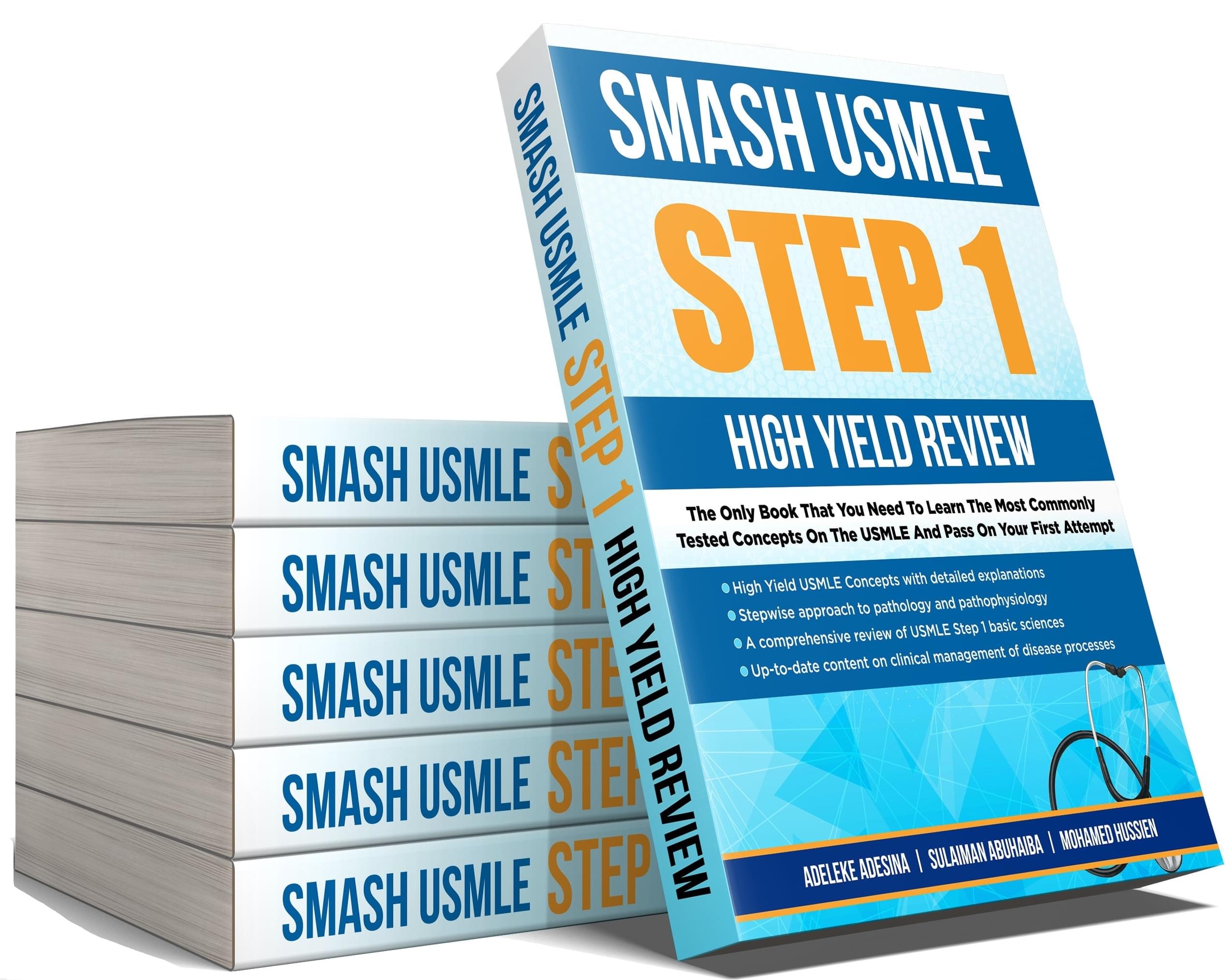
SmashUSMLE High Yield Step 1 Book
If you are an IMG preparing for Step 1, use the SmashUSMLE High Yield Step 1 Book to organize the concepts, mechanisms, and clinical reasoning points that matter most.
- Strengthen high-yield Step 1 foundations
- Review core systems more efficiently
- Connect concepts to NBME-style questions
- Use alongside SmashUSMLE, QBank practice, and NBME review
Build Clinical Reasoning, Not Just Memorization
Step 1 is not only a memory exam. It rewards students who can connect symptoms, mechanisms, labs, pathology, pharmacology, and answer choices.
This is where many IMGs struggle at first. They may know the disease, but they miss the NBME clue or choose a tempting distractor.
How to Improve Clinical Reasoning
- Read the last line of the question first.
- Identify what the question is really asking.
- Summarize the case in one sentence.
- Connect the symptoms to the mechanism.
- Explain why the wrong answers are wrong.
- Write down repeated distractor traps.
Clinical Reasoning Rule
If you cannot explain why the correct answer is right and why the best wrong answer is wrong, you have not finished reviewing the question.
How IMGs Should Use NBME Exams
NBME exams should control your Step 1 timeline. They are not just practice tests. They are feedback tools.
Do not use NBME exams only at the end of your preparation. Use them throughout your plan to determine whether your weak areas are improving.
IMG NBME Strategy
- Take one baseline assessment early.
- Review every missed question by system and discipline.
- Track repeated patterns in a weak-area notebook.
- Use targeted review before taking the next NBME.
- Do not schedule Step 1 until your practice data supports it.
NBME Rule
For IMGs, NBME exams should create the study plan. Do not study everything equally if your data shows specific weak areas.
Common IMG Step 1 Mistakes
1. Waiting Too Long to Take an NBME
Avoiding NBMEs may feel safer emotionally, but it delays the truth. You need early data to build the right plan.
2. Using Too Many Resources
Resource overload creates confusion. Pick a main system, then use supporting tools with purpose.
3. Memorizing Without Applying
Memorization matters, but Step 1 requires application. You must practice turning facts into clinical reasoning.
4. Ignoring Weak Foundations
If your physiology or pathology foundation is weak, question banks alone may not fix the problem.
5. Scheduling the Exam Too Early
Do not schedule your exam because you are tired, pressured, or hopeful. Schedule it when your practice scores support readiness.
How SmashUSMLE Helps IMGs Pass Step 1
SmashUSMLE Reviews helps IMGs prepare for Step 1 with structure, clinical reasoning, high-yield review, QBank practice, NBME strategy, and tutoring support.
Instead of studying randomly, IMGs can use SmashUSMLE to build a plan around weak areas, targeted review, and measurable score improvement.
How IMGs Can Use SmashUSMLE
- Use the Masterclass with AI to rebuild high-yield foundations.
- Use the self-paced course for weak systems.
- Use the SmashUSMLE QBank for targeted practice.
- Use NBME reports to guide weekly study decisions.
- Use one-on-one tutoring when scores are stuck.
Student Success Story
⭐ 4.8 Google Rating | 120+ ReviewsSee How SmashUSMLE Students Move Forward With Confidence
This testimonial shows how structure, coaching, and clinical reasoning strategy can help students prepare with more confidence for USMLE success.
Want help building your own Step 1 first-attempt plan?
Join Free BootcampNeed Help Building an IMG Step 1 Study Plan?
If you are an IMG preparing for Step 1, you do not need more confusion. You need a clear system, honest score tracking, and a plan that helps you improve week by week.
SmashUSMLE Reviews helps IMGs rebuild foundations, improve NBME performance, strengthen clinical reasoning, and prepare for Step 1 with more confidence.
FAQ: How IMGs Can Pass Step 1 on the First Attempt
Can IMGs pass Step 1 on the first attempt?
Yes. IMGs can pass Step 1 on the first attempt with a structured study plan, strong foundation review, NBME tracking, and consistent clinical reasoning practice.
How long should IMGs study for Step 1?
The timeline depends on baseline knowledge, time since basic sciences, work schedule, and NBME scores. Many IMGs need a longer and more structured plan than students currently in school.
What is the biggest mistake IMGs make with Step 1?
The biggest mistake is studying randomly without using NBME data. IMGs should use practice scores to identify weak areas and guide the study plan.
Should IMGs use UWorld for Step 1?
Yes, but UWorld should be used as an application tool. IMGs should review missed questions deeply and connect each miss to a weak concept or reasoning error.
When should IMGs take an NBME?
IMGs should take a baseline assessment early, then use follow-up NBMEs to track improvement and determine exam readiness.
How can SmashUSMLE help IMGs pass Step 1?
SmashUSMLE helps IMGs with structured review, clinical reasoning, QBank practice, NBME weak-area analysis, and one-on-one tutoring when needed.
Ready to Pass Step 1 on the First Attempt?
IMGs can pass Step 1 when preparation is structured, measurable, and focused on clinical reasoning. Start with the right plan, track your weak areas, and get support before your scores stall.