USMLE Step 1 • Clinical Reasoning Strategy
Clinical Clues That Reveal the Diagnosis on Step 1
Learn how to recognize the clinical clues that reveal the diagnosis on Step 1 so you can move faster through vignettes, avoid distractors, and strengthen your NBME performance.

Clinical clues that reveal the diagnosis on Step 1 are often hidden inside the patient age, risk factors, timing, lab pattern, physical exam findings, pathology description, or mechanism being tested.
Many students miss Step 1 questions because they read the vignette passively. They wait for one obvious buzzword instead of actively searching for the clue pattern.
Step 1 is not just asking, “Do you know this fact?” It is asking whether you can connect basic science to a clinical presentation.
The best students learn how to identify the clue that unlocks the diagnosis, then connect that diagnosis to the mechanism, pathophysiology, enzyme defect, receptor, organism, drug, or histologic finding being tested.
This guide will show you how to recognize Step 1 clinical clues, how to organize them, how to avoid distractors, and how to use SmashUSMLE Reviews to improve your clinical reasoning system.
Free USMLE Training
Free USMLE Step 1 Bootcamp
Join our free USMLE masterclass where we break down high-yield concepts, NBME strategies, and clinical reasoning systems used by thousands of medical students and IMGs.
Reserve My SpotWhy Clinical Clues Matter on Step 1
Step 1 questions are built around patterns. The exam gives you clues in the question stem, then asks you to identify the diagnosis, mechanism, pathology, organism, drug effect, enzyme deficiency, or next scientific principle.
If you only memorize facts, every long vignette feels heavy. But if you know how to spot clinical clues, the question becomes more manageable.
Clinical clues help you:
- Recognize the disease pattern faster.
- Separate similar answer choices.
- Connect symptoms to mechanisms.
- Understand what the question is really testing.
- Avoid attractive but wrong distractors.
- Improve your timing on NBME-style questions.
The Big Rule
Do not read Step 1 vignettes like stories. Read them like evidence. Every age, symptom, lab value, timeline, and risk factor is trying to point you somewhere.
The SmashUSMLE Clinical Clue Framework
When you read a Step 1 vignette, train yourself to look for clue categories instead of isolated facts.
Use this framework:
| Clinical Clue Type | Question to Ask | Why It Matters |
|---|---|---|
| Patient Profile | Who is the patient? | Age, sex, pregnancy, immune status, and background often narrow the diagnosis. |
| Risk Factor | What exposure or history makes this disease likely? | Smoking, travel, sexual history, drugs, occupation, and family history are high-yield clues. |
| Timeline | When did symptoms start and how did they progress? | Acute, subacute, chronic, recurrent, and episodic patterns help separate diagnoses. |
| Core Symptom Pattern | What symptoms travel together? | Clusters of symptoms usually reveal the illness script. |
| Physical Exam | What finding makes the diagnosis more specific? | Murmurs, rashes, neurologic findings, abdominal signs, and skin changes can unlock the answer. |
| Lab Pattern | What abnormal values point toward the mechanism? | Electrolytes, acid-base status, CBC, LFTs, renal labs, and hormones are often the clue. |
| Pathology or Imaging | What does the tissue, gross image, biopsy, or scan show? | Histology and pathology descriptions often reveal the exact disease. |
| Mechanism | What process explains the presentation? | Step 1 often asks for the mechanism after giving you the clinical diagnosis. |
Age and Sex Clues on Step 1
Age and sex are not filler details. They often tell you which disease is most likely before you even get to the labs.
Step 1 commonly uses patient demographics to guide you toward a specific diagnosis or mechanism.
| Clinical Clue | Possible Diagnosis Pattern | High-Yield Reasoning |
|---|---|---|
| Young woman with fatigue, cold intolerance, and weight gain | Hypothyroidism | Autoimmune thyroid disease is common in young and middle-aged women. |
| Older man with painless hematuria | Bladder cancer | Smoking history and painless bleeding should raise concern for malignancy. |
| Child with recurrent infections and failure to thrive | Immunodeficiency | Early recurrent infections often point toward immune system defects. |
| Young adult with episodic neurologic symptoms separated in time and space | Multiple sclerosis | Demyelination often appears with relapsing neurologic deficits. |
| Postmenopausal woman with fracture after minor fall | Osteoporosis | Loss of estrogen increases bone resorption and fracture risk. |
Step 1 Tip
Never ignore the first sentence of the vignette. The patient profile often gives you the first major clue.
Risk Factor Clues That Reveal the Diagnosis
Risk factors are some of the most powerful clues on Step 1. They help you decide which diagnosis fits before the question gives you confirmatory findings.
Train yourself to link common risk factors to disease patterns.
- Smoking: COPD, squamous cell lung cancer, small cell lung cancer, bladder cancer, abdominal aortic aneurysm.
- Alcohol use: Pancreatitis, cirrhosis, Wernicke encephalopathy, cardiomyopathy.
- IV drug use: Infective endocarditis, hepatitis C, HIV, skin abscesses.
- Recent viral infection: Guillain-Barré syndrome, myocarditis, postinfectious glomerulonephritis.
- Travel or exposure: Parasitic infections, tuberculosis, malaria, fungal infections.
- Immunosuppression: Opportunistic infections, lymphoma, reactivation disease.
- Family history: Genetic syndromes, inherited cancers, metabolic disorders.
Risk Factor Rule
If the question stem gives you a strong exposure, do not treat it like background information. Ask what disease that exposure is trying to trigger in your mind.
Timing and Progression Clues
Timing is one of the most underrated Step 1 clues. The same symptom can mean different things depending on whether it appeared suddenly, gradually, episodically, or after a trigger.
| Timing Pattern | What It Suggests | Example |
|---|---|---|
| Sudden onset | Vascular, rupture, embolic, or acute obstruction process | Pulmonary embolism, stroke, aortic dissection, torsion. |
| Gradual progression | Degenerative, malignant, chronic inflammatory, or metabolic process | Parkinson disease, cancer, chronic kidney disease. |
| Episodic symptoms | Intermittent release, spasm, seizure, arrhythmia, or endocrine pattern | Pheochromocytoma, migraine, panic attacks, intermittent porphyria. |
| Symptoms after infection | Immune-mediated or postinfectious disease | Guillain-Barré syndrome, rheumatic fever, poststreptococcal glomerulonephritis. |
| Symptoms after medication | Drug toxicity or adverse effect | ACE inhibitor cough, statin myopathy, heparin-induced thrombocytopenia. |
When you see a timeline in the vignette, ask what mechanism fits that timing.
Lab Pattern Clues on Step 1
Step 1 frequently uses lab patterns to reveal the diagnosis or mechanism. You should not memorize labs as random numbers. Learn what patterns they represent.
| Lab Pattern | Likely Concept | Clinical Reasoning Point |
|---|---|---|
| Low MCV, low ferritin, high TIBC | Iron deficiency anemia | Think chronic blood loss, poor intake, or increased requirement. |
| High MCV with neurologic symptoms | Vitamin B12 deficiency | Neurologic findings separate B12 deficiency from folate deficiency. |
| Hyperkalemia, hyponatremia, hypotension | Adrenal insufficiency | Low aldosterone causes salt wasting and potassium retention. |
| High anion gap metabolic acidosis | Toxin, ketoacidosis, lactic acidosis, renal failure | Use the clinical setting to identify the cause. |
| Low calcium, high phosphate, high PTH | Chronic kidney disease secondary hyperparathyroidism | Kidney disease decreases phosphate excretion and vitamin D activation. |
| High TSH, low free T4 | Primary hypothyroidism | The thyroid gland is failing, so the pituitary increases TSH. |
Lab Rule
Do not ask, “What lab is abnormal?” Ask, “What mechanism explains this entire lab pattern?”
Pathology and Histology Clues
Pathology clues are high-yield on Step 1 because they connect disease mechanisms to tissue findings.
When the question stem gives you histology, gross pathology, biopsy language, or microscopic findings, slow down and ask what disease pattern the finding belongs to.
- Caseating granulomas: Tuberculosis or certain fungal infections.
- Noncaseating granulomas: Sarcoidosis, Crohn disease, berylliosis.
- Reed-Sternberg cells: Hodgkin lymphoma.
- Psammoma bodies: Papillary thyroid carcinoma, serous papillary ovarian carcinoma, meningioma.
- Lewy bodies: Parkinson disease or Lewy body dementia.
- Neurofibrillary tangles and beta-amyloid plaques: Alzheimer disease.
- Crescent formation in glomeruli: Rapidly progressive glomerulonephritis.
Pathology Strategy
When Step 1 gives you a tissue clue, the answer is often asking for the diagnosis, mechanism, associated mutation, or pathophysiology behind that finding.
Microbiology Clues That Reveal the Organism
Microbiology questions often hide the answer in the exposure, immune status, Gram stain, toxin, virulence factor, or clinical syndrome.
Do not memorize organisms in isolation. Connect each organism to the clue pattern that reveals it.
| Clinical Clue | Organism Pattern | High-Yield Concept |
|---|---|---|
| Rust-colored sputum and lobar pneumonia | Streptococcus pneumoniae | Encapsulated, alpha-hemolytic, optochin sensitive. |
| Bird droppings and meningitis in immunocompromised patient | Cryptococcus neoformans | Thick capsule, India ink, urease positive. |
| Rice-water diarrhea | Vibrio cholerae | Increases cAMP, causing watery diarrhea. |
| Pseudomembranous colitis after antibiotics | Clostridioides difficile | Toxin-mediated colitis after disruption of normal gut flora. |
| Cat bite with rapidly spreading cellulitis | Pasteurella multocida | Commonly associated with animal bites. |
| Endocarditis after dental procedure | Viridans streptococci | Can adhere to damaged valves after transient bacteremia. |
Pharmacology Clues on Step 1
Pharmacology clues often appear as adverse effects, mechanisms of action, receptor effects, drug interactions, or toxicities.
When you see a drug in the question stem, ask what Step 1 wants you to know about that medication.
- Dry cough after starting blood pressure medication: ACE inhibitor effect from increased bradykinin.
- Muscle pain with elevated CK: Statin-associated myopathy.
- Bleeding with prolonged PT/INR: Warfarin effect on vitamin K-dependent clotting factors.
- Gray baby syndrome: Chloramphenicol toxicity.
- Red man syndrome: Vancomycin infusion reaction.
- Torsades de pointes: QT prolongation from high-risk medications.
- Hyperkalemia after spironolactone: Aldosterone receptor blockade.
Pharm Rule
For Step 1 pharmacology, always connect the drug to its mechanism, toxicity, contraindication, or physiologic effect.
How to Use Clinical Clues During QBank Review
QBank review is where you train your clinical clue recognition. Do not simply read the explanation and move on.
After every missed question, identify the clue you missed.
- Was the diagnosis hidden in the age or sex?
- Was the key clue a risk factor?
- Was the timeline pointing toward a specific mechanism?
- Was the lab pattern enough to reveal the diagnosis?
- Was there a pathology or histology clue?
- Did a distractor pull you away from the right clue?
Then write one short takeaway that teaches your brain how to recognize that pattern next time.
QBank Rule
Your missed question review should not only say what the answer was. It should explain which clue you failed to use.
High-Yield Step 1 Resource
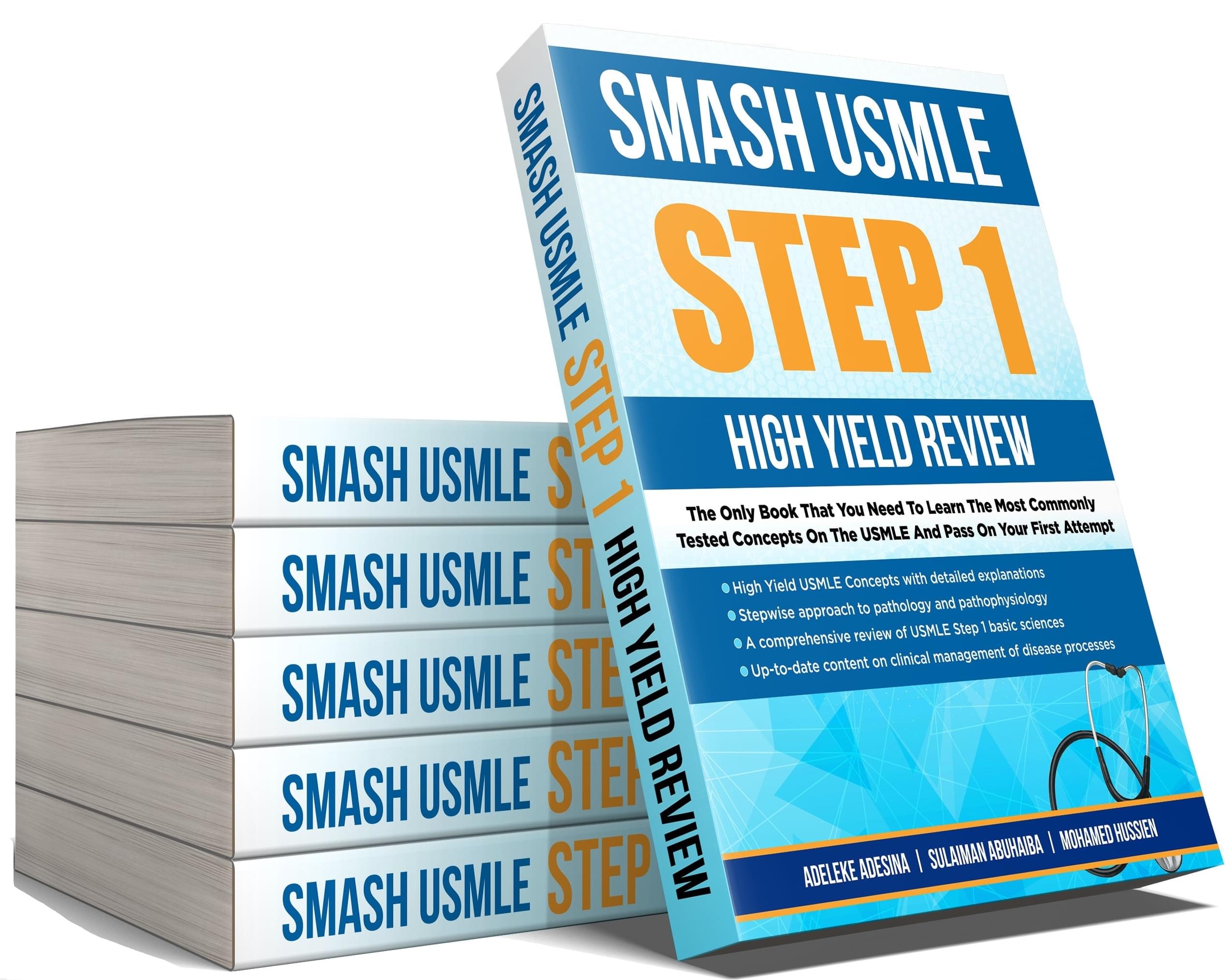
SmashUSMLE High Yield Step 1 Book
If you need a focused Step 1 review resource, use the SmashUSMLE High Yield Step 1 Book to organize the clinical clues, disease patterns, and mechanisms that matter most for Step 1.
- Strengthen high-yield Step 1 foundations
- Recognize clinical clues faster
- Connect mechanisms to disease presentations
- Use alongside SmashUSMLE, NBME review, and QBank practice
Common Mistakes Students Make With Clinical Clues
1. Waiting for One Obvious Buzzword
Step 1 questions do not always give you the classic buzzword. You need to recognize the full clinical pattern, not just one memorized phrase.
2. Ignoring the First Sentence
The first sentence often gives you the age, sex, setting, and risk factor. That information can narrow the diagnosis immediately.
3. Reading Labs Without Interpreting the Pattern
Labs are not random numbers. They usually reveal the mechanism. Always ask what process explains the abnormal values together.
4. Choosing an Answer Based on One Clue Alone
One clue may point you in a direction, but the correct answer should fit the entire vignette.
5. Not Reviewing Why Distractors Were Wrong
Distractors are designed to look familiar. You improve faster when you understand why the wrong answer almost worked but ultimately did not fit.
Student Success Story
⭐ 4.8 Google Rating | 120+ ReviewsSee How SmashUSMLE Students Improve Their Scores
Learn how structured clinical reasoning, NBME-focused review, and disciplined preparation can help IMGs break through score plateaus.
Want to learn the same clinical reasoning system used by SmashUSMLE students?
Join Free BootcampNeed Help Recognizing Step 1 Clinical Clues?
If you are overwhelmed by long vignettes, confusing labs, similar diagnoses, and tricky answer choices, you are not alone. Most students do not need more random resources. They need a better clinical reasoning system.
SmashUSMLE Reviews helps students use the Masterclass with AI, self-paced course, QBank practice, NBME weak-area analysis, and one-on-one tutoring to recognize clinical clues and improve USMLE performance.
FAQ: Clinical Clues That Reveal the Diagnosis on Step 1
What are clinical clues on Step 1?
Clinical clues are details in the question stem that point toward the diagnosis, mechanism, organism, pathology finding, drug effect, or physiologic process being tested.
How do I get better at recognizing Step 1 clues?
Review missed questions by identifying the clue you missed, the diagnosis it should have suggested, and the distractor that pulled you away.
Are buzzwords enough for Step 1?
No. Buzzwords can help, but Step 1 often tests the same disease without the classic phrase. You need to recognize full clinical patterns.
Which clues are most important on Step 1?
The most important clues are patient profile, risk factors, timing, symptom clusters, lab patterns, pathology findings, and mechanisms.
How should I review missed questions?
For each missed question, ask what clue you missed, what diagnosis it pointed toward, why the correct answer fit, and why your chosen answer was wrong.
How can SmashUSMLE help with clinical reasoning?
SmashUSMLE Reviews helps students organize high-yield Step 1 clues, connect mechanisms to clinical patterns, analyze NBME weak areas, and improve question strategy through structured courses, QBank practice, and tutoring.