USMLE Step 1 • Clinical Reasoning Strategy
How to Build Illness Scripts for USMLE
Learn how to build illness scripts for USMLE so you can recognize disease patterns faster, organize clinical clues, avoid distractors, and improve your NBME and QBank performance.

How to build illness scripts for USMLE is one of the most important clinical reasoning skills for Step 1, Step 2 CK, and Step 3 because the exam rewards students who can recognize disease patterns inside clinical vignettes.
Many students study diseases as isolated facts. They memorize symptoms, lab findings, buzzwords, and treatments, but they struggle when the question stem presents the disease in a slightly different way.
Illness scripts help fix that problem. They organize each disease into a predictable mental framework so you can move from scattered facts to structured pattern recognition.
The goal is not to memorize longer notes. The goal is to build a cleaner mental model for how each disease presents, what risk factors matter, what findings confirm it, what distractors look similar, and what the next best step should be.
In this guide, you will learn how to build illness scripts for USMLE, how to use them during QBank review, how to connect them to NBME weak areas, and how SmashUSMLE Reviews can help you strengthen clinical reasoning faster.
Free USMLE Training
Free USMLE Step 1 Bootcamp
Join our free USMLE masterclass where we break down high-yield concepts, NBME strategies, and clinical reasoning systems used by thousands of medical students and IMGs.
Reserve My SpotWhat Are Illness Scripts for USMLE?
Illness scripts are structured mental templates that help you recognize diseases based on the clinical pattern presented in a question stem.
Instead of studying a disease as a random list of facts, an illness script organizes the disease into the key features that matter most on the USMLE.
- Who gets the disease?
- What risk factors point toward it?
- How does the patient usually present?
- What physical exam findings matter?
- What labs, imaging, or pathology findings confirm it?
- What diseases look similar?
- What is the next best step?
The Big Idea
Illness scripts help you stop asking, “Do I remember this fact?” and start asking, “What disease pattern is this question describing?”
Why Illness Scripts Matter for USMLE Questions
USMLE questions rarely test isolated facts in a clean way. They usually give you a patient, a setting, risk factors, symptoms, exam findings, lab data, and several tempting answer choices.
If your knowledge is disorganized, the question feels overwhelming. But if you have a strong illness script, the clues start to line up.
Illness scripts help you:
- Recognize classic disease presentations faster.
- Separate similar diagnoses from each other.
- Understand why distractors are wrong.
- Connect basic science mechanisms to clinical findings.
- Improve your timing on long question stems.
- Build stronger clinical reasoning for Step 1, Step 2 CK, and Step 3.
USMLE Strategy
The best students do not just memorize diseases. They recognize the pattern, compare it against close differentials, and choose the answer that best fits the entire clinical picture.
The SmashUSMLE Illness Script Framework
A strong illness script should be simple enough to remember but detailed enough to help you answer questions.
Use this framework for every high-yield disease:
| Illness Script Component | Question to Ask | USMLE Purpose |
|---|---|---|
| Patient Profile | Who usually gets this disease? | Helps identify age, sex, risk factors, and setting. |
| Trigger or Risk Factor | What makes this disease more likely? | Helps you catch clue words in the vignette. |
| Core Presentation | What symptoms and signs define it? | Helps you recognize the clinical pattern. |
| Mechanism | What is the pathophysiology? | Helps connect basic science to the answer choice. |
| Key Test Finding | What lab, imaging, ECG, pathology, or biopsy finding confirms it? | Helps with diagnosis and interpretation questions. |
| Look-Alikes | What diseases can be confused with this? | Helps eliminate tempting distractors. |
| Next Step | What should happen next? | Helps with management and Step 2 CK style questions. |
How to Build an Illness Script Step by Step
Step 1: Start With the Disease Name
Pick one disease at a time. Do not try to build scripts for an entire organ system in one sitting.
Start with high-yield diseases that appear often in QBank blocks, NBME exams, and SmashUSMLE lessons.
Step 2: Identify the Classic Patient
Ask yourself who usually gets this disease. Age, sex, occupation, exposures, travel history, pregnancy status, immune status, and medication use can all matter.
Step 3: Write the Core Presentation
Focus on the key symptoms and signs that usually appear in the question stem.
Do not write every possible symptom. Write the symptoms that help you recognize the disease on the exam.
Step 4: Add the Mechanism
For Step 1, this is critical. You need to know why the disease happens and how that mechanism explains the presentation.
Mechanism turns memorization into understanding.
Step 5: Add Confirming Findings
Write the lab, imaging, ECG, pathology, biopsy, or physical exam finding that confirms the diagnosis.
Step 6: Add the Look-Alikes
This is where most students get better. Every disease has distractors. Your illness script should show how to separate similar diagnoses.
Step 7: Add the Next Best Step
For Step 2 CK and Step 3, always add the next best diagnostic test, initial management, definitive treatment, or preventive step.
Illness Script Rule
Keep each illness script short enough to review quickly. If it becomes a textbook chapter, it will not help you on exam day.
Example Illness Script for USMLE
Here is a simple example using acute pancreatitis.
| Component | Acute Pancreatitis Illness Script |
|---|---|
| Patient Profile | Patient with gallstones, heavy alcohol use, hypertriglyceridemia, ERCP history, or medication trigger. |
| Core Presentation | Severe epigastric pain radiating to the back, nausea, vomiting, worse after meals. |
| Mechanism | Premature activation of pancreatic enzymes causing autodigestion and inflammation. |
| Key Findings | Elevated lipase, epigastric tenderness, possible hypocalcemia in severe disease. |
| Look-Alikes | Peptic ulcer disease, cholecystitis, myocardial infarction, bowel obstruction. |
| Next Step | IV fluids, pain control, bowel rest, treat underlying cause. |
This type of script helps you recognize the disease pattern quickly and compare it against similar causes of abdominal pain.
How to Use Illness Scripts During QBank Review
The best time to build illness scripts is during QBank review because missed questions show you exactly where your thinking broke down.
After each missed question, ask:
- What disease was the question really testing?
- Which clue should have pointed me toward the diagnosis?
- Which distractor pulled me away?
- What mechanism did I misunderstand?
- What finding would help me recognize this next time?
Then update your illness script with one short, high-yield learning point.
QBank Rule
Do not just read the explanation. Convert the missed question into a sharper illness script.
How to Use NBME Exams to Improve Illness Scripts
NBME exams show you which illness scripts are weak, incomplete, or confused with similar diagnoses.
After reviewing an NBME, group your missed questions by disease pattern.
- Diseases you did not recognize at all.
- Diseases you recognized but confused with another diagnosis.
- Diseases where you knew the diagnosis but missed the mechanism.
- Diseases where you knew the concept but missed the next best step.
Then use SmashUSMLE Reviews, the Masterclass with AI, the self-paced course, and the SmashUSMLE QBank to rebuild those weak scripts.
High-Yield Step 1 Resource
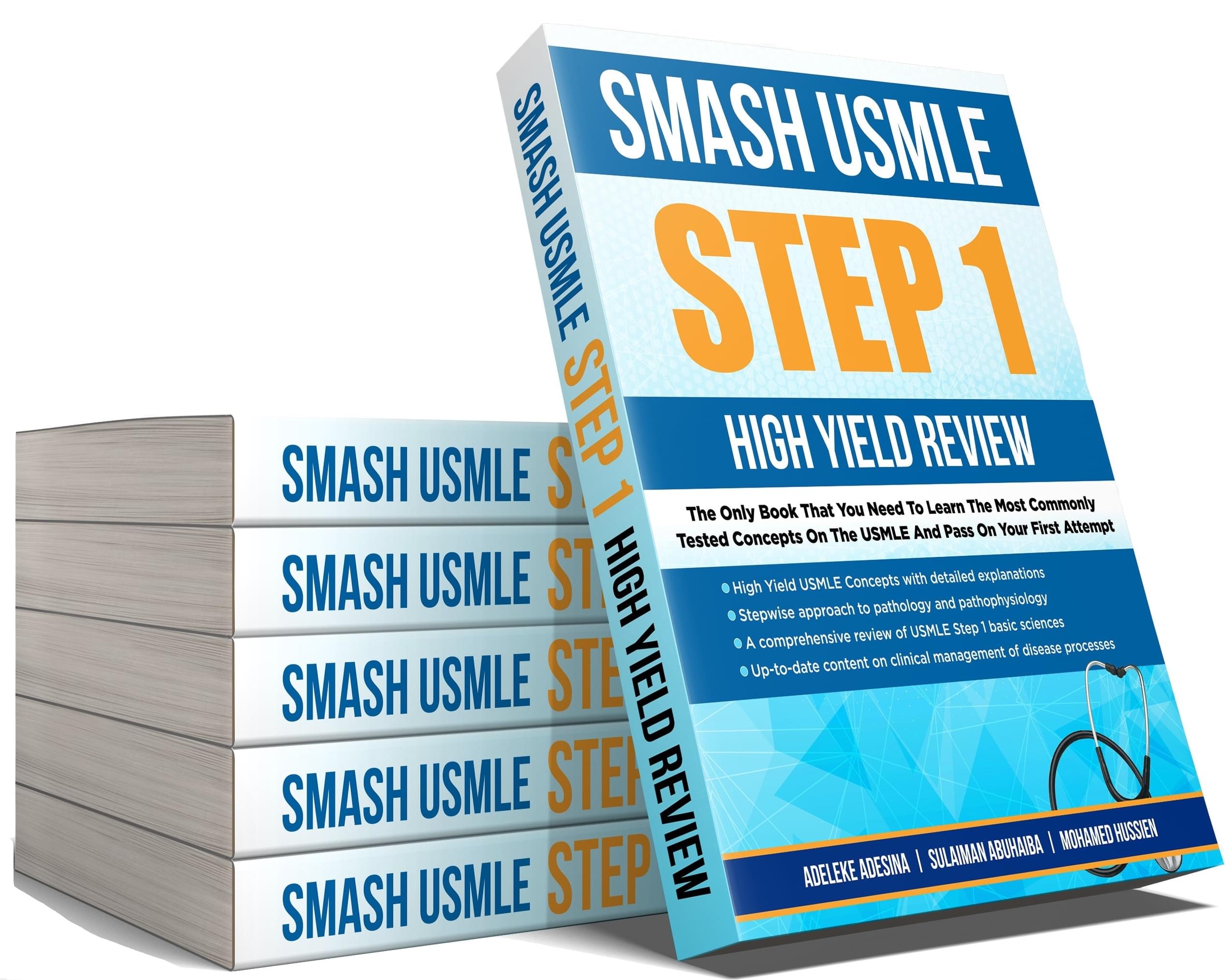
SmashUSMLE High Yield Step 1 Book
If you need a focused Step 1 review resource, use the SmashUSMLE High Yield Step 1 Book to organize the concepts, disease patterns, and clinical reasoning points that matter most for Step 1.
- Strengthen high-yield Step 1 foundations
- Build stronger illness scripts
- Connect mechanisms to clinical presentations
- Use alongside SmashUSMLE, NBME review, and QBank practice
Common Illness Script Mistakes
1. Writing Too Much
An illness script should be clean and usable. If it becomes too long, you will not review it consistently.
2. Memorizing Symptoms Without Mechanism
Symptoms matter, but mechanism explains why the symptoms happen. That is especially important for Step 1.
3. Ignoring Look-Alike Diagnoses
Many USMLE questions test whether you can separate similar diagnoses. Always include close differentials in your script.
4. Not Updating Scripts After Missed Questions
Your scripts should improve as you do more questions. Every missed question should make your pattern recognition sharper.
5. Studying Scripts Without Doing Questions
Illness scripts work best when paired with active QBank practice, NBME review, and clinical reasoning.
Student Success Story
⭐ 4.8 Google Rating | 120+ ReviewsSee How SmashUSMLE Students Improve Their Scores
Learn how structured clinical reasoning, NBME-focused review, and disciplined preparation can help IMGs break through score plateaus.
Want to learn the same clinical reasoning system used by SmashUSMLE students?
Join Free BootcampNeed Help Building Illness Scripts for USMLE?
If you are overwhelmed by long question stems, similar diagnoses, tricky answer choices, and inconsistent NBME performance, you are not alone. Most students do not need more random resources. They need a better clinical reasoning system.
SmashUSMLE Reviews helps students use the Masterclass with AI, self-paced course, QBank practice, NBME weak-area analysis, and one-on-one tutoring to build stronger illness scripts and improve USMLE performance.
FAQ: How to Build Illness Scripts for USMLE
What is an illness script for USMLE?
An illness script is a structured disease pattern that includes the typical patient, risk factors, clinical presentation, mechanism, key findings, look-alike diagnoses, and next best step.
Why are illness scripts important for Step 1?
Illness scripts help Step 1 students connect mechanisms to clinical presentations, recognize disease patterns, and answer vignette-style questions more effectively.
Do illness scripts help with Step 2 CK?
Yes. Illness scripts are very useful for Step 2 CK because they help you recognize diagnoses, compare differentials, and choose the next best step in management.
How long should an illness script be?
A good illness script should be short, focused, and easy to review. It should include only the highest-yield clues that help you answer questions.
Should I build illness scripts from QBank questions?
Yes. QBank questions are one of the best sources for building illness scripts because they show how diseases are tested and what distractors commonly appear.
How can SmashUSMLE help me build illness scripts?
SmashUSMLE Reviews helps students organize high-yield disease patterns, strengthen clinical reasoning, review NBME weak areas, and apply concepts through structured lessons, QBank practice, and tutoring.
Ready to Improve Your USMLE Scores?
USMLE preparation becomes easier when you stop memorizing random facts and start building a system for clinical reasoning. Join thousands of medical students and IMGs using SmashUSMLE’s system to prepare for Step 1, Step 2 CK, and Step 3.