

Highest Yield Renal Topics for USMLE Step 1 can feel overwhelming because renal questions often combine physiology, pathology, pharmacology, acid-base, and electrolyte reasoning in one vignette.
Many students struggle with renal because they memorize isolated facts instead of understanding flow, pressure, filtration, hormones, tubular transport, and compensatory mechanisms.
The key is to think like a clinician. Ask what changed in the nephron, what the kidney is trying to compensate for, and which lab pattern proves the diagnosis.
This guide breaks down the renal topics most worth mastering for Step 1, including nephritic syndromes, nephrotic syndromes, renal tubular acidosis, diuretics, electrolyte disorders, acid-base patterns, and classic USMLE-style traps.
Free USMLE Training
Free USMLE Step 1 Bootcamp
Join our free USMLE masterclass where we break down high-yield concepts, NBME strategies, and clinical reasoning systems used by thousands of medical students and IMGs.
Reserve My SpotHighest Yield Renal Topics for USMLE Step 1
The highest yield renal topics for Step 1 are not random. They usually test the relationship between glomerular injury, tubular transport, volume status, acid-base physiology, and drug mechanism.
Renal Rule
Before choosing an answer, ask: Is this a glomerular problem, tubular problem, vascular problem, hormone problem, or drug effect?
Renal Physiology
Renal physiology is the foundation. Focus on GFR, renal plasma flow, filtration fraction, Starling forces, RAAS, ADH, aldosterone, and how each nephron segment handles sodium, potassium, hydrogen, bicarbonate, calcium, magnesium, and water.
| Nephron Segment | High-Yield Function | Step 1 Association |
|---|---|---|
| Proximal tubule | Reabsorbs most sodium, bicarbonate, glucose, amino acids, and phosphate | Fanconi syndrome, carbonic anhydrase inhibitors |
| Thick ascending limb | Reabsorbs sodium, potassium, chloride; dilutes urine | Loop diuretics, Bartter syndrome |
| Distal convoluted tubule | Reabsorbs sodium chloride and calcium | Thiazides, Gitelman syndrome |
| Collecting duct | Regulates potassium, hydrogen, sodium, and water | Aldosterone, ADH, potassium-sparing diuretics |
Nephritic Syndromes
Nephritic syndromes usually present with hematuria, red blood cell casts, hypertension, oliguria, and mild to moderate proteinuria. Step 1 often tests the trigger, immune pattern, and clinical timing.
- Poststreptococcal glomerulonephritis: occurs after strep infection with low C3.
- IgA nephropathy: hematuria shortly after mucosal infection.
- Goodpasture syndrome: anti-GBM antibodies with lung and kidney disease.
- Alport syndrome: hereditary nephritis with hearing and eye findings.
- Rapidly progressive glomerulonephritis: crescents on biopsy.
Renal Worksheet
Renal Masterclass Worksheet
Use this worksheet to organize renal physiology, nephritic and nephrotic syndromes, renal tubular acidosis, diuretics, electrolyte patterns, and acid-base reasoning for Step 1.
- Compare nephritic vs nephrotic syndromes
- Map diuretics to nephron segments
- Review RTA lab patterns
- Build stronger acid-base reasoning
Nephrotic Syndromes
Nephrotic syndromes present with heavy proteinuria, edema, hypoalbuminemia, hyperlipidemia, and fatty casts. Step 1 commonly asks you to identify the disease from age, risk factor, or biopsy clue.
| Condition | Classic Clue | Biopsy Association |
|---|---|---|
| Minimal change disease | Child with edema after infection | Effacement of foot processes |
| Focal segmental glomerulosclerosis | HIV, heroin use, sickle cell disease | Segmental sclerosis |
| Membranous nephropathy | Adult nephrotic syndrome, malignancy, hepatitis B, lupus | Spike and dome pattern |
| Diabetic nephropathy | Long-standing diabetes | Kimmelstiel-Wilson nodules |
Renal Tubular Acidosis
RTA questions test whether you understand acid handling. The major pattern is normal anion gap metabolic acidosis, but each type has a different mechanism.
- Type 1 distal RTA: impaired hydrogen secretion, high urine pH, kidney stones.
- Type 2 proximal RTA: impaired bicarbonate reabsorption, often linked to Fanconi syndrome.
- Type 4 RTA: hypoaldosteronism or aldosterone resistance with hyperkalemia.
Diuretics
Diuretics are high yield because they connect physiology, pharmacology, electrolytes, and adverse effects. Know where each drug acts and what electrolyte changes it causes.
Diuretic Rule
For every diuretic, memorize the nephron site, transporter target, potassium effect, calcium effect, and classic toxicity.
Electrolyte Disorders
Step 1 renal questions often hide the diagnosis inside sodium, potassium, calcium, magnesium, chloride, bicarbonate, and serum osmolality patterns.
- Hyperkalemia: think renal failure, ACE inhibitors, ARBs, spironolactone, hypoaldosteronism, Type 4 RTA.
- Hypokalemia: think vomiting, diuretics, hyperaldosteronism, Bartter, Gitelman.
- Hypercalcemia: think malignancy, primary hyperparathyroidism, thiazides, sarcoidosis.
- Hyponatremia: think SIADH, heart failure, cirrhosis, adrenal insufficiency, excess free water.
Acid-Base Disorders
Acid-base questions become easier when you follow a sequence: identify pH, decide metabolic vs respiratory, calculate compensation, check anion gap, then connect the pattern to the clinical story.
| Pattern | Common Cause | High-Yield Clue |
|---|---|---|
| High anion gap metabolic acidosis | Lactic acidosis, ketoacidosis, renal failure, toxins | Low bicarbonate with elevated anion gap |
| Normal anion gap metabolic acidosis | Diarrhea, RTA | Low bicarbonate with normal gap |
| Metabolic alkalosis | Vomiting, diuretics, hyperaldosteronism | High bicarbonate |
| Respiratory acidosis | Hypoventilation | High CO2 |
USMLE-Style Renal Question Box
Question: A child develops cola-colored urine two weeks after a sore throat. Labs show low C3 and red blood cell casts. What is the most likely diagnosis?
Answer: Poststreptococcal glomerulonephritis.
Reasoning: Delayed hematuria after strep infection, low complement, and RBC casts point to nephritic syndrome from immune complex deposition.
Recommended Step 1 Book
High Yield Step 1 Review Book
The High Yield Step 1 Review Book helps organize classic Step 1 mechanisms, high-yield patterns, and board-style concepts without getting buried in low-yield details.
Get the High Yield Step 1 Book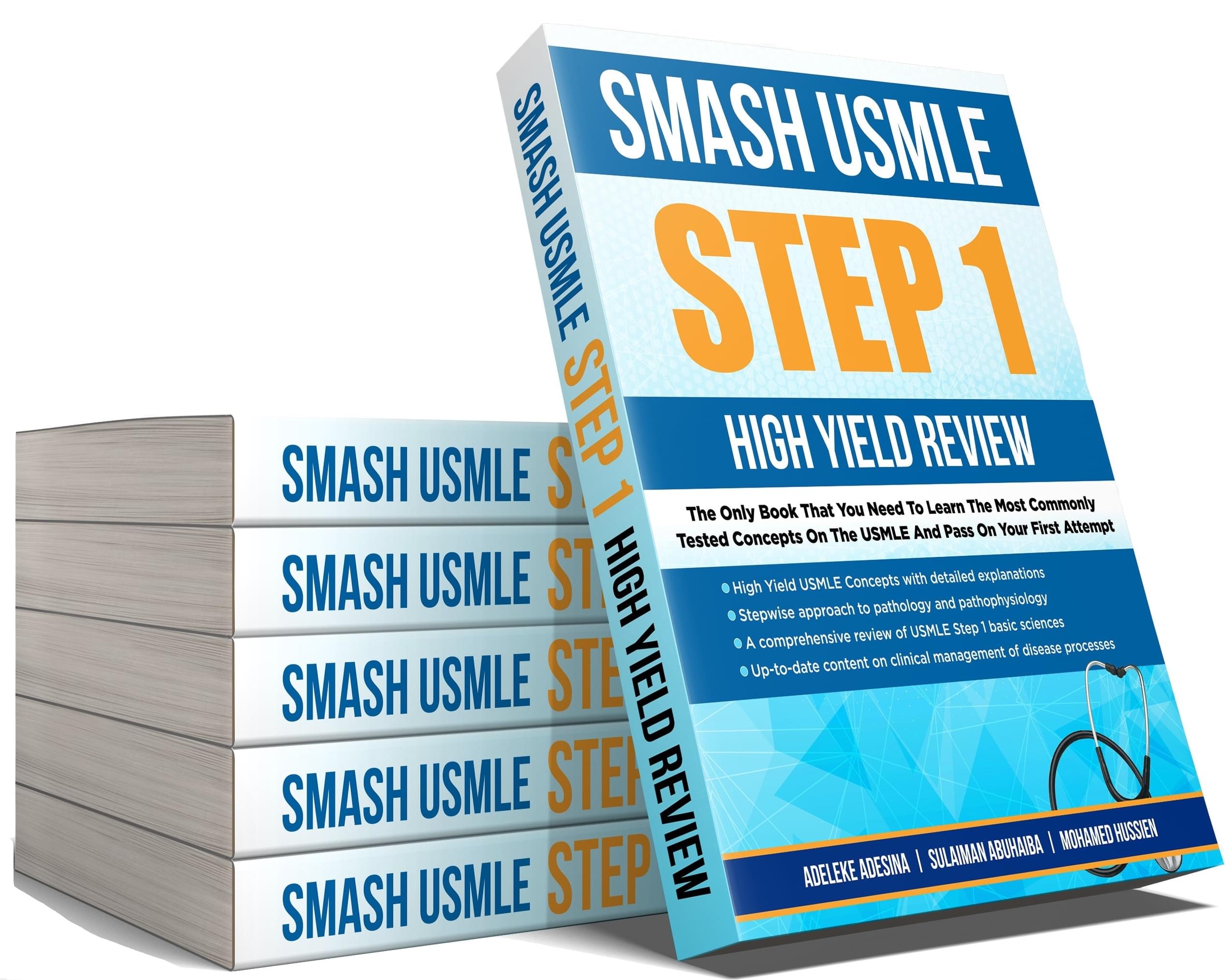
Student Success Story
⭐ 4.8 Google Rating | 120+ ReviewsSee How Dr. Wayne Passed Step 1
Dr. Wayne’s story shows how structured Step 1 preparation, high-yield review, and clinical reasoning can help students build confidence and move forward successfully.
Want to learn the same Step 1 strategy used by SmashUSMLE students?
Join Free BootcampNeed Help Mastering Step 1 Renal?
If renal physiology, nephritic syndromes, nephrotic syndromes, acid-base disorders, and diuretics feel confusing, SmashUSMLE can help you build a structured Step 1 study plan.
FAQ: Highest Yield Renal Topics for USMLE Step 1
What are the Highest Yield Renal Topics for USMLE Step 1?
The highest yield renal topics for USMLE Step 1 include renal physiology, nephritic syndromes, nephrotic syndromes, renal tubular acidosis, diuretics, electrolyte disorders, and acid-base interpretation.
How should I study renal physiology for Step 1?
Study renal physiology by nephron segment. Know what each segment reabsorbs, secretes, and how hormones or drugs change that process.
How do I remember nephritic vs nephrotic syndromes?
Nephritic syndromes are inflammatory and usually cause hematuria, RBC casts, hypertension, and oliguria. Nephrotic syndromes cause heavy proteinuria, edema, hypoalbuminemia, hyperlipidemia, and fatty casts.
Are diuretics high yield for Step 1 renal?
Yes. Diuretics are very high yield because they test nephron transporters, electrolyte changes, acid-base effects, and classic adverse reactions.
What is the best way to approach renal acid-base questions?
Start with pH, then identify whether the primary disorder is metabolic or respiratory. Next, check compensation, calculate the anion gap, and connect the lab pattern to the clinical scenario.
Ready to Improve Your USMLE Scores?
Step 1 renal becomes easier when you stop memorizing random facts and start using a clinical reasoning system. SmashUSMLE helps students prepare with structured review, high-yield strategy, courses, tutoring, and free training.