
Failed USMLE Step 1? You’re not alone. Although the result is disappointing, thousands of medical students successfully recover, pass their retake, and continue toward residency every year.
Many students fail Step 1 because they study harder without studying smarter. They repeat UWorld, reread First Aid, restart Anki, and still do not fix the real reason their NBME scores were not improving.
The most important thing after failing Step 1 is not panic. It is diagnosis. You need to understand why you failed, what your weak areas are, and what must change before your retake.
This guide will walk you through what to do after failing USMLE Step 1, how to rebuild confidence, when to retake the exam, how to use NBME exams, and how SmashUSMLE Reviews can help you create a stronger comeback plan.
Free USMLE Training
Free USMLE Step 1 Bootcamp
Join our free USMLE masterclass where we break down high-yield concepts, NBME strategies, and clinical reasoning systems used by students preparing for Step 1.
Reserve My SpotFirst Thing to Do After Failing Step 1
The first thing to do after failing Step 1 is pause before you make another plan. Do not immediately schedule your retake, buy more resources, or restart the same study routine.
A failed Step 1 attempt is painful, but it gives you important information. Your job is to use that information correctly.
Start by asking three questions:
- Was my foundation weak?
- Was my question strategy weak?
- Was my test-day performance different from my practice scores?
The Big Rule
Do not retake Step 1 until your practice scores clearly show that something has changed. A retake without a new system is a dangerous gamble.
Why Students Fail USMLE Step 1
Most students do not fail Step 1 because they are not smart enough. They fail because their preparation had gaps that were never corrected.
Some students know the facts but cannot apply them to clinical vignettes. Others do thousands of questions but never deeply review why they missed them.
Common Reasons Students Fail Step 1
- Weak foundation in physiology, pathology, pharmacology, microbiology, or biochemistry
- Doing questions without reviewing missed concepts deeply
- Overusing passive resources instead of active recall and application
- Taking NBME exams too late
- Ignoring low NBME scores and hoping the real exam will feel easier
- Poor timing, fatigue, anxiety, or test-day strategy
- Using too many resources without a clear plan
Important Truth
Your Step 1 retake plan should be based on why you failed, not on copying another student’s schedule.
How to Review Your Step 1 Score Report
Your score report is not just bad news. It is a map. It can show you which content areas were weak and whether your performance was close to passing or far from it.
Review your report carefully and write down the systems or disciplines that were below your expected level.
What to Look For
- Lowest organ systems
- Weakest disciplines
- Repeated content gaps
- Pattern of near-misses
- Mismatch between NBME scores and real exam performance
Once you know the pattern, you can build a retake plan around your weakest areas instead of studying everything equally.
How to Rebuild Confidence After Failing Step 1
Confidence after failing Step 1 does not come from pretending everything is fine. It comes from seeing evidence that your new plan is working.
That means you need small wins. Start with weak topics, master them one by one, and track your improvement through questions and NBME-style review.
How to Regain Momentum
- Stop calling yourself a failure.
- Identify the specific skills that broke down.
- Use a structured retake plan.
- Track weekly improvement.
- Get help early if your scores are stuck.
Confidence Comes From Data
You will feel more confident when your question accuracy improves, your weak areas shrink, and your NBME scores show that your retake plan is working.
How to Create a Step 1 Retake Plan
A good Step 1 retake plan must be more focused than your first plan. You cannot simply repeat the same schedule and expect a different outcome.
Your plan should include content repair, active question practice, NBME reassessment, and test-day strategy.
Step 1 Retake Framework
- Diagnose: Review your score report and recent NBME data.
- Repair: Rebuild weak foundations using structured lessons.
- Apply: Use focused QBank blocks by weak system.
- Review: Study missed questions by mechanism, not memorized answer.
- Measure: Take NBME exams to confirm readiness.
- Execute: Build pacing, stamina, and test-day confidence.
| Retake Phase | Main Goal | What to Do |
|---|---|---|
| Week 1 | Diagnose weaknesses | Review score report, old NBMEs, missed questions, and weak systems. |
| Weeks 2–4 | Rebuild foundation | Use SmashUSMLE lessons, Masterclass with AI, and targeted review. |
| Weeks 5–6 | Apply concepts | Use focused QBank blocks and deep missed-question review. |
| Weeks 7–8 | Confirm readiness | Take NBME exams, review errors, and strengthen final weak areas. |
How to Use NBME Exams Before Your Retake
NBME exams should guide your retake timeline. They should not be used only as a final check.
If your NBMEs are not improving, your plan needs adjustment. Do not ignore that signal.
NBME Retake Strategy
- Take a baseline assessment before rebuilding your plan.
- Review every missed question by system and discipline.
- Track repeated weak areas.
- Do not retake Step 1 based on hope.
- Use multiple passing-range practice scores before scheduling your exam.
NBME Rule
Your retake date should be earned by your practice data. It should not be chosen because you feel tired of studying.
High-Yield Step 1 Resource
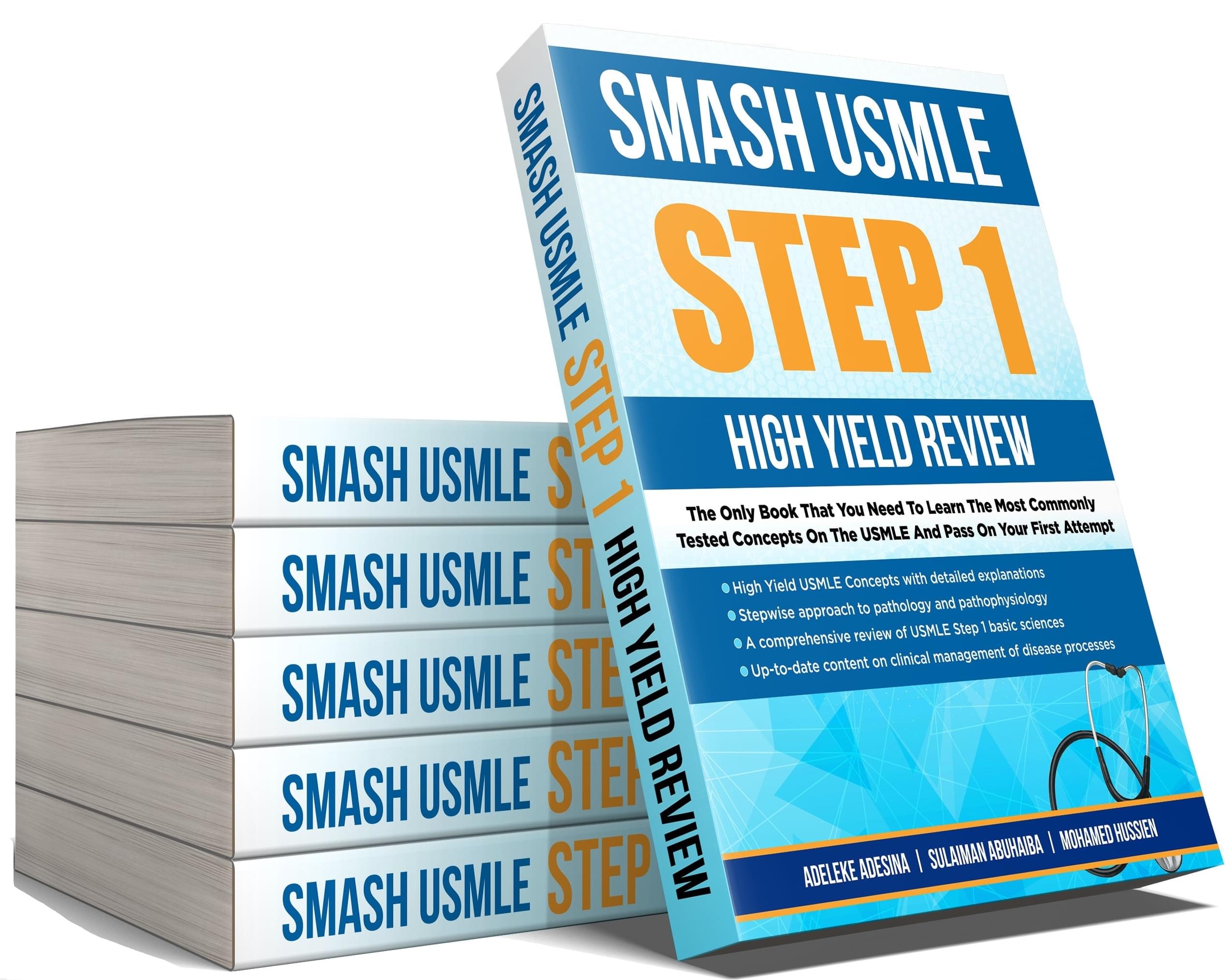
SmashUSMLE High Yield Step 1 Book
If you are rebuilding after a failed Step 1 attempt, use the SmashUSMLE High Yield Step 1 Book to organize the concepts, patterns, and clinical reasoning points that matter most.
- Strengthen weak Step 1 foundations
- Review high-yield systems more efficiently
- Connect facts to NBME-style reasoning
- Use alongside SmashUSMLE, QBank practice, and tutoring
Best Resources After Failing Step 1
After failing Step 1, you do not need every resource. You need the right resource used the right way.
The best resources should help you diagnose weaknesses, rebuild concepts, practice application, and measure readiness.
| Resource | Purpose | How to Use It After Failing |
|---|---|---|
| SmashUSMLE Reviews | Structured Step 1 recovery system | Use it to rebuild weak foundations, improve clinical reasoning, and create a guided retake plan. |
| SmashUSMLE QBank | Targeted weak-area practice | Use focused blocks based on weak systems from your score report and NBMEs. |
| NBME Exams | Readiness and weak-area diagnosis | Use NBMEs to decide when you are truly ready for your retake. |
| UWorld | Clinical question application | Review missed questions by mechanism and distractor pattern. |
| First Aid | High-yield reference | Use it as a reference, not as your entire study plan. |
| Tutoring | Personalized diagnosis and correction | Use tutoring if your scores are stuck or you cannot identify why you failed. |
How SmashUSMLE Helps Step 1 Retake Students
SmashUSMLE Reviews helps students move from random studying to a structured recovery system.
After failing Step 1, the goal is not to do more of everything. The goal is to identify what failed, rebuild weak areas, and practice clinical reasoning until your scores improve.
How to Use SmashUSMLE After Failing Step 1
- Use the Masterclass with AI to rebuild high-yield foundations.
- Use the self-paced course to review weak systems.
- Use the SmashUSMLE QBank for targeted practice.
- Use NBME analysis to guide your study plan.
- Use one-on-one tutoring if you need personalized correction.
Mistakes to Avoid After Failing Step 1
1. Retaking Too Soon
Do not retake Step 1 until your practice data proves you are ready. Emotion is not enough. You need evidence.
2. Repeating the Same Study Plan
If your first plan did not work, repeating it harder is not a strategy. You need a different system.
3. Avoiding NBME Exams
Some students avoid NBMEs because they are afraid of the score. That fear can cost you another attempt.
4. Studying Everything Equally
Your weakest areas deserve the most attention. Study based on data, not comfort.
5. Waiting Too Long to Ask for Help
If your scores are not improving, get help early. A coach can often see patterns you are missing.
Student Success Story
⭐ 4.8 Google Rating | 120+ ReviewsSee How SmashUSMLE Students Come Back Stronger
This testimonial shows how the right structure, coaching, and clinical reasoning strategy can help students rebuild confidence and move forward after a difficult USMLE experience.
Want help building your own Step 1 comeback plan?
Join Free BootcampNeed Help After Failing Step 1?
If you failed Step 1, you do not need shame. You need a stronger plan, better diagnosis, and a system that helps you fix the real problem.
SmashUSMLE Reviews helps students rebuild foundations, review NBME weak areas, improve question strategy, and prepare for a stronger Step 1 retake.
FAQ: What to Do After Failing USMLE Step 1
What should I do first after failing USMLE Step 1?
First, pause and review what happened. Do not immediately reschedule. Review your score report, NBME history, weak areas, study method, and test-day performance before making a new plan.
Can I still become a doctor after failing Step 1?
Yes. A failed Step 1 attempt is serious, but it does not end your medical career. You need a clear retake plan, stronger scores, and an honest strategy for explaining the attempt later.
How long should I study before retaking Step 1?
The timeline depends on your baseline and weak areas. Many students need several weeks to months. The safest answer is to retake only when your NBME scores consistently show readiness.
Should I use UWorld again after failing Step 1?
Yes, but do not use it the same way. Review missed questions deeply, identify why you missed them, and connect each miss to a weak area or reasoning problem.
When should I get Step 1 tutoring?
Get tutoring if your NBME scores are stuck, you failed Step 1, you do not know why you are missing questions, or your study plan feels disorganized.
How can SmashUSMLE help after failing Step 1?
SmashUSMLE can help you rebuild foundations, target weak systems, improve clinical reasoning, review NBME performance, and create a structured retake plan.
Ready to Build Your Step 1 Comeback Plan?
Failing Step 1 hurts, but your next move matters more than the failed attempt. Get the structure, coaching, and clinical reasoning system you need to prepare smarter for your retake.