
USMLE Step 1 • 2026 Study Strategy
How to Study for USMLE Step 1 in 2026
Learn how to prepare for Step 1 using SmashUSMLE Reviews, NBME weak-area analysis, QBank practice, structured clinical reasoning, and a realistic study schedule.

How to study for USMLE Step 1 in 2026 is one of the most important questions medical students and IMGs are asking because Step 1 preparation now requires a smarter system built around clinical reasoning, NBME weak-area analysis, QBank practice, and structured review.
Many students make the same mistake. They collect too many resources, watch too many videos, read too many notes, and never build a reliable system for improving their NBME performance.
Step 1 is not a memorization contest. It is a foundational science exam that rewards students who understand mechanisms, recognize patterns, and apply concepts inside clinical vignettes.
The best study strategy starts by identifying your weak areas first, then using SmashUSMLE Reviews, the Masterclass with AI, the self-paced course, the SmashUSMLE QBank, NBME review, and one-on-one coaching to fix those weaknesses systematically.
This guide will show you how to build a Step 1 study plan, how to use SmashUSMLE Reviews, how to approach NBME exams, when to use UWorld, how to structure your schedule, and how to avoid the mistakes that keep students stuck.
Free USMLE Training
Free USMLE Step 1 Bootcamp
Join our free USMLE masterclass where we break down high-yield concepts, NBME strategies, and clinical reasoning systems used by thousands of medical students and IMGs.
Reserve My SpotHow to Study for USMLE Step 1 in 2026 Without Wasting Time
The best way to study for Step 1 is not to read every resource. It is to build a repeatable system that tells you exactly what is weak, how to fix it, and how to confirm improvement.
A strong Step 1 strategy has five parts:
- Identify your weak areas with NBME-style performance data.
- Rebuild the foundation with SmashUSMLE Masterclass with AI and the self-paced course.
- Use the SmashUSMLE QBank to target weak systems.
- Use UWorld and NBME review to strengthen application.
- Get one-on-one tutoring if your scores are not improving.
The Big Rule
Do not measure Step 1 preparation by how many pages you read. Measure it by whether your NBME weak areas are shrinking and your clinical reasoning is improving.
What Students Should Know About the Step 1 Exam Format in 2026
For students testing on or after May 14, 2026, the official USMLE exam resources list Step 1 as fourteen 30-minute blocks in one 8-hour testing session, with up to 280 items.
The exam content, total number of items, and overall length remain focused on foundational science, but the updated software and shorter blocks mean students should practice pacing, quick resets, and shorter timed-block rhythm before exam day.
| Step 1 Format Area | 2026 Format | Study Strategy Impact |
|---|---|---|
| Testing Session | One 8-hour testing session | You still need stamina, pacing, and a break strategy. |
| Blocks | Fourteen 30-minute blocks | Practice shorter timed blocks and quick mental resets. |
| Questions | Up to 280 items | You need consistent accuracy across the full testing day. |
| Core Skill | Foundational science application | Focus on mechanisms, clinical reasoning, and NBME-style interpretation. |
The Step 1 Study System You Need in 2026
Step 1 is pass/fail, but pass/fail does not mean easy. The danger is that students underestimate the exam until their NBME scores show major weaknesses.
You do not need to study randomly. You need a system.
The SmashUSMLE Step 1 Study Framework
- Diagnose: Use NBME performance to find weak systems.
- Learn: Use the SmashUSMLE Masterclass with AI and self-paced course to rebuild foundations.
- Apply: Use the SmashUSMLE QBank to practice weak topics.
- Measure: Retake NBME-style assessments to track improvement.
- Coach: Use one-on-one tutoring when scores stall.
Step 1 Is Not Just Recall
If your study method only helps you recognize flashcard facts, but not apply them to vignettes, your NBME improvement will be limited.
How to Use SmashUSMLE Reviews for Step 1
SmashUSMLE Reviews should be used as your main clinical reasoning and structure system for Step 1 preparation.
The goal is to stop studying randomly and start using a system that connects NBME weak-area analysis, high-yield review, QBank practice, and coaching.
Step 1: Start With the Masterclass With AI and Self-Paced Course
Begin with the SmashUSMLE Masterclass with AI and the self-paced course. This gives you a structured way to rebuild high-yield Step 1 foundations without jumping between too many resources.
- Use the Masterclass to understand the highest-yield Step 1 systems.
- Use AI-supported learning to reduce overwhelm and guide review.
- Use the self-paced course to revisit weak topics until they become clear.
- Connect every topic back to how the NBME tests it.
Step 2: Use NBME Exams to Determine Your Weak Areas First
Do not wait until the end of dedicated study to discover your weaknesses. Use NBME performance early to identify what is actually holding you back.
After every NBME, ask:
- Which organ systems are consistently weak?
- Am I missing physiology, pathology, pharmacology, microbiology, or biochemistry?
- Am I losing points because of content gaps or question interpretation?
- Which distractors keep trapping me?
- What topics need focused review this week?
NBME Strategy
Your NBME should create your study plan. Do not study everything equally. Study what your NBME proves is weak.
Step 3: Use the SmashUSMLE QBank to Study Weak Systems
Once your weak areas are clear, use the SmashUSMLE QBank to target those systems with focused practice.
- Do focused QBank blocks on weak systems first.
- Review missed questions by mechanism.
- Write down repeated clinical patterns.
- Track whether weak areas improve over time.
- Use mixed blocks later to build exam readiness.
Step 4: Get One-on-One Coaching With SmashUSMLE Tutors
If your NBME scores are not improving, do not keep repeating the same strategy. That usually means you need someone to diagnose the problem.
One-on-one coaching can help you identify whether your issue is content, question interpretation, timing, test anxiety, poor review strategy, or weak clinical reasoning.
High-Yield Step 1 Resource
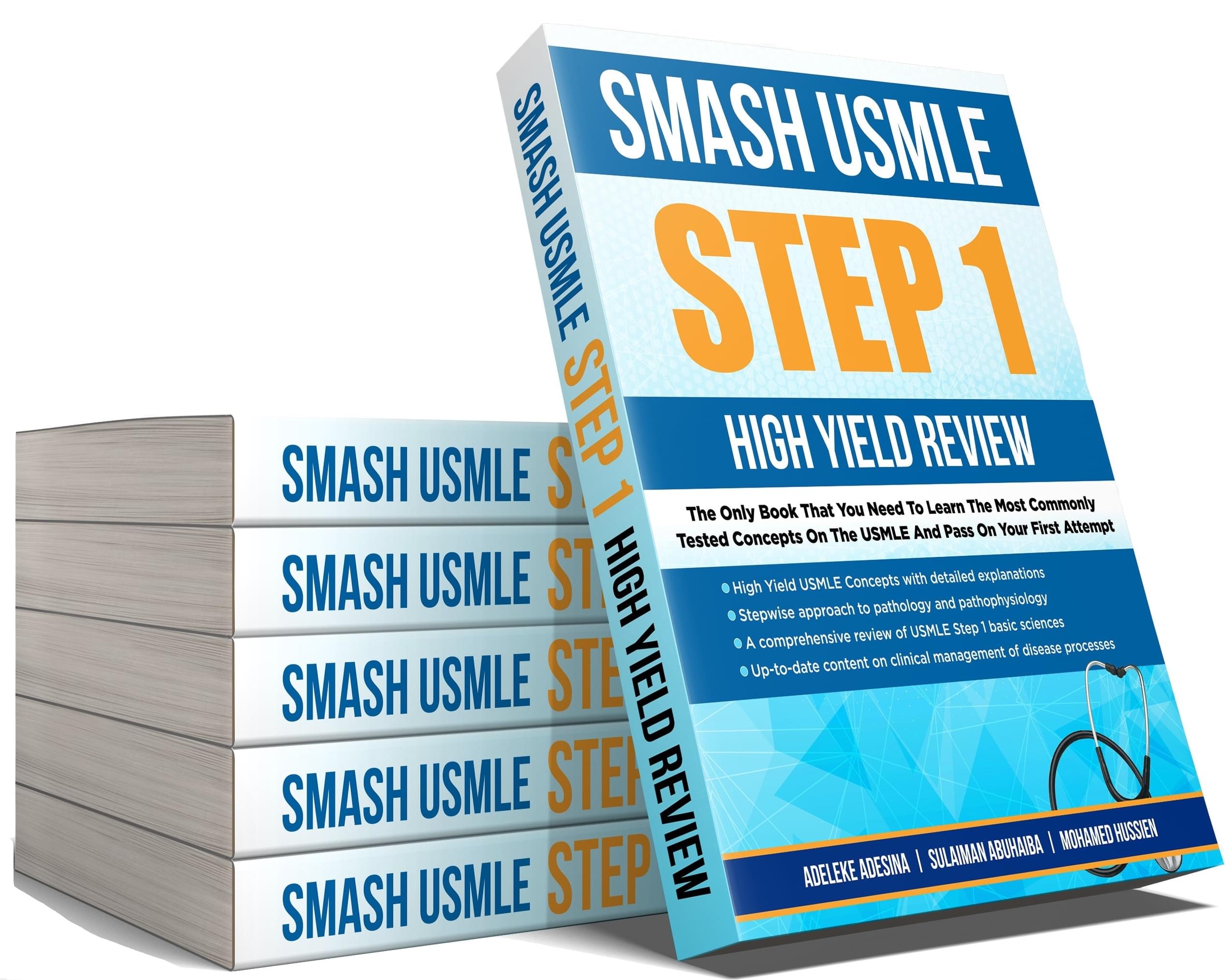
SmashUSMLE High Yield Step 1 Book
If you need a focused Step 1 review resource, use the SmashUSMLE High Yield Step 1 Book to organize the concepts, patterns, and clinical reasoning points that matter most for Step 1.
- Strengthen high-yield Step 1 foundations
- Review core systems more efficiently
- Connect concepts to NBME-style reasoning
- Use alongside SmashUSMLE, NBME review, and QBank practice
Best Step 1 Resources to Use in 2026
Most students do not fail Step 1 because they lack resources. They struggle because they use too many resources without a clear system.
Your Step 1 resources should help you identify weaknesses, learn high-yield concepts, apply those concepts to questions, and improve NBME performance.
| Resource | Purpose | How to Use It |
|---|---|---|
| SmashUSMLE Reviews | Clinical reasoning, NBME strategy, structured content review, QBank practice, and coaching | Start with the Masterclass with AI and self-paced course, identify weak areas using NBME performance, use the SmashUSMLE QBank to target gaps, and get one-on-one coaching when needed. |
| SmashUSMLE QBank | Targeted weak-area practice | Use focused blocks to attack weak systems, then move into mixed blocks as readiness improves. |
| NBME Exams | Readiness assessment and weak-area diagnosis | Use NBMEs early and repeatedly to determine what needs focused repair. |
| UWorld | Question application and pattern recognition | Use it as a learning tool, not just a score tracker. Review why answers are correct and why distractors are wrong. |
| First Aid or Core Notes | High-yield reference | Use as a map, not as your only learning method. |
| Pathology Resource | Disease mechanisms | Use to understand pathophysiology, not memorize every detail. |
| Anki | Spaced repetition | Use selectively. Do not let flashcards replace questions, NBME review, or clinical reasoning. |
Resource Rule
SmashUSMLE should be your clinical reasoning and structure system. Question banks and NBMEs are powerful, but they work best when you know how to diagnose your weak areas and study with a plan.
How to Use NBME Exams to Find Weak Areas
NBME exams should guide your study plan. They are not just score reports.
A good NBME review should show you:
- Which systems are weak
- Which question types you miss repeatedly
- Whether your content review is working
- Whether your timing is improving
- Whether you need one-on-one coaching
NBME Weak-Area Strategy
After each NBME, divide your misses into four categories:
- Content gap: You did not know the concept.
- Application gap: You knew the fact but could not apply it.
- Distractor trap: You were pulled toward a tempting wrong answer.
- Timing or fatigue: You lost accuracy because of pacing or stamina.
Then use that analysis to decide what to study inside SmashUSMLE Reviews, what QBank blocks to do, and whether tutoring would help you correct the pattern faster.
How to Use the SmashUSMLE QBank
The SmashUSMLE QBank should be used to turn weak areas into active learning.
Do not simply do questions to say you completed them. Use the QBank to identify patterns and reinforce the clinical reasoning process.
SmashUSMLE QBank Method
- Start with focused blocks based on NBME weak areas.
- Review explanations by mechanism.
- Write one clinical pearl per missed question.
- Repeat weak topics until your accuracy improves.
- Switch into mixed blocks when your foundation becomes stronger.
QBank Rule
Your goal is not to finish questions. Your goal is to improve the way you think through questions.
How to Use UWorld for Step 1
UWorld can still be useful, but it should not replace your study system. Use it after you understand your weak areas and know what you are trying to improve.
The most common mistake is doing questions, reading the explanation, saying “that makes sense,” and moving on. That feels productive, but it does not create durable improvement.
The Correct UWorld Review Method
After every missed question, ask:
- Did I miss this because I lacked content knowledge?
- Did I miss the clinical clue?
- Did I misread the question stem?
- Did I choose a tempting distractor?
- Did I know the concept but fail to apply it?
Then write one short takeaway in your missed-concept notebook and connect it back to your NBME weak-area plan.
Sample Step 1 Study Schedule for 2026
The right schedule depends on your baseline, school schedule, and test date. But most students need a structured weekly rhythm.
8-Week Dedicated Step 1 Schedule
| Week | Main Goal | Study Focus |
|---|---|---|
| Week 1 | Baseline and weak-area mapping | Take a baseline NBME, identify weak systems, begin SmashUSMLE Masterclass with AI and self-paced review. |
| Week 2 | Foundation repair | Use SmashUSMLE lessons and QBank blocks to target the weakest systems. |
| Week 3 | Question integration | Increase QBank volume and review missed concepts deeply. |
| Week 4 | NBME reassessment | Take another NBME, analyze errors, and adjust your study plan. |
| Week 5 | Mixed blocks and weak systems | Use timed mixed blocks plus targeted review for persistent weak areas. |
| Week 6 | Clinical reasoning refinement | Focus on distractors, question interpretation, and NBME patterns. |
| Week 7 | Final readiness check | Take another NBME or Free 120, review errors, and refine test strategy. |
| Week 8 | Final review | Review high-yield mistakes, sleep, test-day plan, and confidence strategy. |
Daily Study Template
| Time Block | Task | Purpose |
|---|---|---|
| Morning | SmashUSMLE lesson or Masterclass review | Rebuild high-yield concepts and clinical reasoning. |
| Late Morning | SmashUSMLE QBank block | Apply the concept immediately. |
| Afternoon | Deep question review | Identify missed concepts and distractor traps. |
| Evening | NBME weak-area notebook or flashcards | Reinforce repeated weak patterns. |
| Weekly | NBME review or tutoring session | Adjust strategy based on performance. |
Step 1 Strategy for IMGs in 2026
IMGs often have a different Step 1 challenge. Many are not just reviewing. They are rebuilding foundational sciences after a long gap, adapting to NBME-style questions, and balancing work, family, or visa pressure.
If you are an IMG, your plan should be realistic and structured.
IMG Step 1 Priorities
- Start with a diagnostic NBME or structured baseline assessment.
- Use SmashUSMLE Reviews to rebuild weak foundations.
- Use the Masterclass with AI and self-paced course for structure.
- Use the SmashUSMLE QBank to target weak systems.
- Get one-on-one tutoring if your scores are stuck.
- Do not compare your timeline to someone in a different situation.
For IMGs
Your goal is not to study perfectly. Your goal is to study consistently, diagnose your weaknesses honestly, and build clinical reasoning one question block at a time.
Common Step 1 Study Mistakes to Avoid
1. Starting With Random Resources Instead of a System
More resources do not automatically mean better preparation. Start with a structured system, then use resources to support that system.
2. Waiting Too Long to Take an NBME
If you wait until the end to discover your weak areas, you may not have enough time to fix them.
3. Doing QBank Questions Without Reviewing Patterns
Questions only help if you review them deeply and identify the reason you missed them.
4. Ignoring Tutoring When Scores Are Stuck
If your NBME scores are not improving after weeks of studying, you may need one-on-one coaching to identify the real problem.
5. Studying Without a Test-Day Strategy
You need a plan for pacing, breaks, food, sleep, and anxiety control. The 2026 block structure makes rhythm especially important.
Student Success Story
⭐ 4.8 Google Rating | 120+ ReviewsSee How Dr. Evelyn Passed Step 1 and Step 2
Dr. Evelyn’s story shows how structured clinical reasoning, NBME-focused review, and disciplined preparation can help students move forward with confidence.
Want to learn the same clinical reasoning system used by SmashUSMLE students?
Join Free BootcampNeed Help Building a Step 1 Study Plan With SmashUSMLE?
If you are overwhelmed by UWorld, NBME scores, Anki, First Aid, and resource overload, you are not alone. Most students do not need more resources. They need a better system.
SmashUSMLE Reviews helps students use the Masterclass with AI, self-paced course, QBank practice, NBME weak-area analysis, and one-on-one tutoring to build a smarter Step 1 preparation plan.
FAQ: How to Study for USMLE Step 1 in 2026
How do I know if I am studying for USMLE Step 1 in 2026 the right way?
You are studying the right way if your NBME weak areas are improving, your QBank misses are turning into clear learning points, and you can explain mechanisms instead of only recognizing memorized facts.
Should I use SmashUSMLE before UWorld?
Yes. SmashUSMLE can help you build structure, clinical reasoning, and weak-area strategy before and during UWorld review. UWorld works better when you know what you are trying to fix.
How should I use NBME exams for Step 1?
Use NBMEs to identify weak systems first. Then use SmashUSMLE lessons, QBank practice, and tutoring to target those weaknesses before your next assessment.
When should I get Step 1 tutoring?
Consider tutoring if your NBME scores are stuck, you keep missing the same question types, your study plan feels disorganized, or you cannot identify why your performance is not improving.
Is the SmashUSMLE QBank enough for Step 1?
The SmashUSMLE QBank should be used as part of a complete strategy that includes Masterclass review, self-paced learning, NBME analysis, and focused remediation.
How long should I study for Step 1?
Many students use 6–10 weeks of dedicated study, but the right timeline depends on your baseline, school schedule, NBME scores, and weak areas.
Ready to Improve Your USMLE Scores?
Step 1 preparation becomes easier when you stop studying randomly and start using a system. Join thousands of medical students and IMGs using SmashUSMLE’s clinical reasoning system to prepare for Step 1, Step 2 CK, and Step 3.